Video editors cutting 4K footage who need sustained writes, not just burst benchmarks.
Best Portable SSDs for Video Editing (2026)
The best portable SSDs for video editors: sustained write speeds, thermal behavior, and which USB port you actually need.
Our top picks at a glance
Best for 4K editing
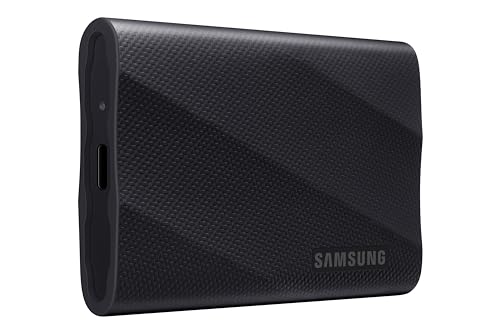 Samsung T9 Portable SSD
Video editors and creators whose machines have USB 3.2 Gen 2x2 ports.
Best on older ports
 Samsung T7 Portable SSD
Everyday backup and file transfer where reliability and encryption matter.
Best for field shoots
 SanDisk Extreme Portable SSD
Travelers and outdoor shooters who need water and dust resistance.
Video editors should buy speed they can actually use: the Samsung T9 if your machine has USB 3.2 Gen 2x2, otherwise the Samsung T7, which maxes out the 10 Gbps ports most laptops have. For location work, add the SanDisk Extreme Portable for its IP55 shell.
The picks, ranked
| Pick | Sequential read | Sequential write | Interface | Buy |
|---|---|---|---|---|
| Best for 4K editingSamsung T9 Portable SSD | Up to 2,000 MB/s | Up to 2,000 MB/s | USB 3.2 Gen 2x2 (20 Gbps) | Check price |
| Best on older portsSamsung T7 Portable SSD | Up to 1,050 MB/s | Up to 1,000 MB/s | USB 3.2 Gen 2 (10 Gbps) | Check price |
| Best for field shootsSanDisk Extreme Portable SSD | Up to 1,050 MB/s | Up to 1,000 MB/s | USB 3.2 Gen 2 (10 Gbps) | Check price |
Best for 4K editing
Samsung T9 Portable SSD
2,000 MB/s for editors with USB 3.2 Gen 2x2.
2,000 MB/s sequential speeds and Dynamic Thermal Guard keep timeline scrubbing and exports smooth. Verify your machine has a USB 3.2 Gen 2x2 port first.
Strengths
- Up to 2,000 MB/s read and write, double the T7
- Dynamic Thermal Guard prevents heat throttling
- Works with phones and tablets over USB-C
Limitations
- Needs USB 3.2 Gen 2x2 (20 Gbps) for full speed
- Falls back to slower speeds on older ports
- Premium price per gigabyte
What owners report
Commonly praised
- Very fast transfers on USB 3.2 Gen 2x2
- Handles heat well under long writes
- Durable rubberized shell
Common complaints
- Top speed needs a Gen 2x2 port, which few laptops have
- Pricier than the T7
- Software is basic
Recurring themes from owner reviews on retailers and forums, summarised by our editors. Updated October 2026.
| Sequential read | Up to 2,000 MB/s |
|---|---|
| Sequential write | Up to 2,000 MB/s |
| Interface | USB 3.2 Gen 2x2 (20 Gbps) |
| Thermal | Dynamic Thermal Guard |
| Capacities | 1 TB, 2 TB, 4 TB |
Best for: Video editors and creators whose machines have USB 3.2 Gen 2x2 ports.
Skip if: Your computer lacks a Gen 2x2 port; you will not see 2,000 MB/s.
Best on older ports
Samsung T7 Portable SSD
The 1,050 MB/s benchmark with hardware encryption.
At 1,050 MB/s over USB 3.2 Gen 2, the T7 saturates the ports most editing laptops actually have, for less money than the T9.
Strengths
- 1,050 MB/s read and 1,000 MB/s write over USB 3.2 Gen 2
- AES 256-bit hardware encryption built in
- Compact aluminum unibody at about 58 g
Limitations
- No IP water or dust rating
- No carabiner loop or ruggedized shell
- Speeds need a USB 3.2 Gen 2 port to max out
What owners report
Commonly praised
- Fast, compact, and reliable
- Aluminum body stays cool
- Works across Mac, PC, and consoles
Common complaints
- Rare speed drops after firmware updates
- USB-C connection can loosen on some units
- Samsung Magician software is limited on some systems
Recurring themes from owner reviews on retailers and forums, summarised by our editors. Updated October 2026.
| Sequential read | Up to 1,050 MB/s |
|---|---|
| Sequential write | Up to 1,000 MB/s |
| Interface | USB 3.2 Gen 2 (10 Gbps) |
| Encryption | AES 256-bit hardware |
| Weight | About 58 g |
Best for: Everyday backup and file transfer where reliability and encryption matter.
Skip if: You need IP-rated water resistance or 2,000 MB/s speeds.
Best for field shoots
SanDisk Extreme Portable SSD
IP55 ruggedness with a carabiner loop for the field.
IP55 and the carabiner loop matter on location; 1,050 MB/s is plenty for ingesting cards between setups.
Strengths
- IP55 water and dust resistance
- Carabiner loop for bag or belt attachment
- 1,050 MB/s read over USB 3.2 Gen 2
Limitations
- No hardware encryption option
- Rubberized shell adds bulk versus the T7
- Sustained writes can throttle under long transfers
What owners report
Commonly praised
- Rugged, water-resistant design
- Fast and pocketable
- Carabiner loop is handy
Common complaints
- Some 2023 units, mostly 4TB, failed and lost data before a firmware fix
- Owners advise keeping firmware up to date and backups elsewhere
- Support responses have been criticized
Recurring themes from owner reviews on retailers and forums, summarised by our editors. Updated October 2026.
| Sequential read | Up to 1,050 MB/s |
|---|---|
| Sequential write | Up to 1,000 MB/s |
| Interface | USB 3.2 Gen 2 (10 Gbps) |
| Durability | IP55, 2-meter drop protection |
| Weight | About 53 g |
Best for: Travelers and outdoor shooters who need water and dust resistance.
Skip if: You want hardware encryption or the absolute fastest speeds.
Questions, answered
Can I edit 4K video directly off a portable SSD?
Yes. Even 1,050 MB/s far exceeds the bitrates of common 4K codecs; the bottleneck becomes the editing software and CPU, not the drive. Sustained write speed matters most when exporting back to the same drive.
Why do some SSDs slow down during long exports?
Thermal throttling: sustained writes heat the controller, and some drives cut speed to cool down. Samsung's Dynamic Thermal Guard on the T9 manages this better than most, which is why it leads for video work.
How much capacity does a video editor need?
A 1 TB drive holds roughly 10 to 15 hours of typical 4K mirrorless footage; 2 TB is the comfortable working size for active projects, with finished work archived elsewhere.