Best of
The Best USB Microphones (2026)
The best USB microphones for 2026: Blue Yeti X, Shure MV7, HyperX QuadCast S, and Fifine K688 compared for podcasting, streaming, and calls.
Our top picks at a glance
Best for podcasting
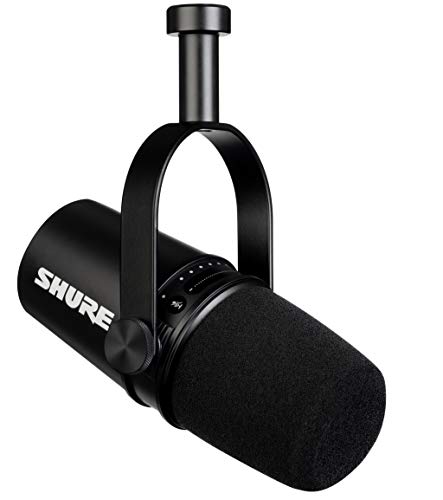 Shure MV7
Podcasters in untreated rooms who want professional sound and an upgrade path.
The Blue Yeti X is the best USB microphone for most people, with four pickup patterns and excellent plug-and-play sound. Podcasters should get the Shure MV7 for its room-noise rejection and USB/XLR flexibility. Streamers will love the HyperX QuadCast S with tap-to-mute and included shock mount. On a tight budget, the Fifine K688 delivers dynamic-mic clarity for far less.
The picks, ranked
| Pick | Capsule | Resolution | Pickup patterns | Buy |
|---|---|---|---|---|
 Best overallBlue Yeti X | 4-capsule condenser array | 24-bit / 48 kHz | Cardioid, bidirectional, omnidirectional, stereo | Check price |
| Best for podcastingShure MV7 | Dynamic, voice-tuned | — | — | Check price |
 Best for streamingHyperX QuadCast S | — | — | Stereo, omni, cardioid, bidirectional | Check price |
 Best budgetFifine K688 | Dynamic | — | — | Check price |
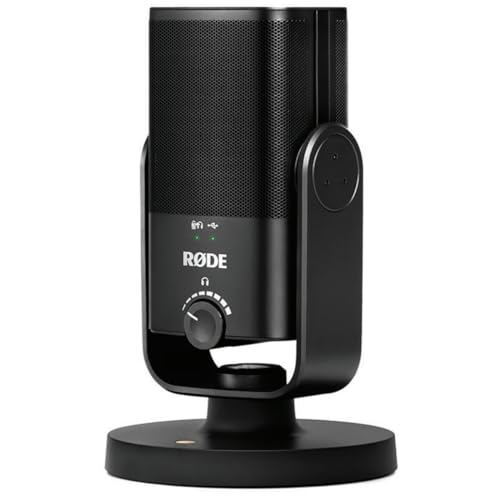 Best compactRode NT-USB Mini | Condenser, cardioid | — | — | Check price |
 Best software ecosystemElgato Wave:3 | Condenser, cardioid | — | — | Check price |
 Best budget dynamicAudio-Technica ATR2100x-USB | Dynamic, cardioid | — | — | Check price |
 Best starter micSamson Q2U Recording and Podcasting Pack | Dynamic, cardioid | — | — | Check price |
 Best USB/XLR hybrid dynamicRode PodMic USB | Dynamic, cardioid, broadcast-tuned | — | — | Check price |
 Best simple streamer micHyperX SoloCast | Condenser, cardioid | — | — | Check price |
Best overall
Blue Yeti X
The versatile creator standard.
Strengths
- Four switchable pickup patterns
- 24-bit/48 kHz recording
- Live LED level meter for easy gain setting
- Zero-latency headphone monitoring
Limitations
- Picks up room noise like all condensers
- No shock mount included
- Bulky on smaller desks
What owners report
Commonly praised
- Clear, detailed voice sound for a USB microphone
- The LED level meter and multiple pickup patterns are handy
- Easy to set up with no extra interface needed
Common complaints
- The USB connection is a weak point and can break if knocked
- Some owners report random disconnects from the computer
- It picks up a lot of room noise, and support experiences are mixed
Recurring themes from owner reviews on retailers and forums, summarised by our editors. Updated October 2026.
| Capsule | 4-capsule condenser array |
|---|---|
| Resolution | 24-bit / 48 kHz |
| Pickup patterns | Cardioid, bidirectional, omnidirectional, stereo |
| Controls | Multi-function smart knob, LED meter |
| Connection | USB |
Best for: Creators who want one flexible mic for voice, interviews, and music.
Skip if: Your room is noisy and you record solo; consider a dynamic mic.
Best for podcasting
Shure MV7
Broadcast voice with a USB/XLR future.
Strengths
- Dynamic capsule with excellent room rejection
- USB and XLR outputs
- Voice-tuned DSP and auto-level mode
- Rich, broadcast-style sound
Limitations
- Premium pricing
- Wants close mic technique
- Single cardioid pattern
What owners report
Commonly praised
- Warm, clear vocal sound that owners say holds up for years
- Both USB and XLR outputs give it room to grow
- It rejects background noise well when used close up
Common complaints
- It must be used very close to the mouth or the sound thins out
- Touch controls can be triggered by accident
- The cable connection feels flimsy, and no stand or shock mount is included
Recurring themes from owner reviews on retailers and forums, summarised by our editors. Updated October 2026.
| Capsule | Dynamic, voice-tuned |
|---|---|
| Outputs | USB and XLR (hybrid) |
| Pattern | Cardioid |
| DSP | Voice Isolation Technology, auto-level mode |
| Monitoring | Headphone output with zero-latency monitoring |
Best for: Podcasters in untreated rooms who want professional sound and an upgrade path.
Skip if: You need multiple pickup patterns or the absolute lowest price.
Best for streaming
HyperX QuadCast S
Studio sound with RGB flair and tap-to-mute.
Strengths
- 4 selectable polar patterns for solo, interview, or roundtable.
- Tap-to-mute with an LED indicator you can see mid-stream.
- Built-in shock mount and pop filter reduce handling noise.
- Dynamic RGB lighting syncs with the rest of a HyperX setup.
Limitations
- Condenser pickup still catches loud keyboards.
- RGB adds cost over the non-S QuadCast.
- USB only, no XLR upgrade path.
What owners report
Commonly praised
- Good sound out of the box with a built-in shock mount and pop filter
- Tap-to-mute with a clear indicator light
- The RGB lighting is popular with streamers
Common complaints
- It is sensitive and picks up keyboard and room noise
- Some owners report USB connection drops or static after months of use
- It is large and takes up desk space
Recurring themes from owner reviews on retailers and forums, summarised by our editors. Updated October 2026.
| Pickup patterns | Stereo, omni, cardioid, bidirectional |
|---|---|
| Recording | 48kHz, 16-bit |
| Mute | Tap-to-mute with LED indicator |
| Mount | Built-in shock mount |
| Lighting | Per-zone RGB |
Best for: Streamers who want great audio plus on-camera RGB style.
Skip if: You dislike RGB or want XLR for a mixer setup.
Best budget
Fifine K688
Dynamic clarity on a budget.
Strengths
- Dynamic capsule rejects room noise
- USB and XLR outputs
- Tap-to-mute and gain control onboard
- Excellent value
Limitations
- Less refined highs than premium dynamics
- Basic included stand
- Plastic-heavy build
| Capsule | Dynamic |
|---|---|
| Outputs | USB and XLR (hybrid) |
| Pattern | Cardioid |
| Controls | Tap-to-mute, gain knob, headphone volume |
| Monitoring | Headphone output |
Best for: Budget creators who want dynamic room rejection and XLR for later.
Skip if: You want the finest high-frequency detail or premium build.
Best compact
Rode NT-USB Mini
Studio condenser sound in a desk-friendly mini.
The NT-USB Mini shrinks Rode's condenser sound onto a magnetic desk stand, with a built-in pop filter and zero-latency monitoring. It is the quality-per-square-inch pick for crowded desks.
Strengths
- Condenser capsule with detailed, broadcast-friendly sound
- Built-in pop filter tames plosives without accessories
- Zero-latency headphone monitoring with volume control
- Compact magnetic desk stand with detachable design
Limitations
- Cardioid only; no multi-pattern versatility
- Picks up room noise like all condensers
- USB only, no XLR upgrade path
| Capsule | Condenser, cardioid |
|---|---|
| Pop filter | Built-in |
| Monitoring | Zero-latency headphone output |
| Mount | Magnetic detachable desk stand |
| Connection | USB-C |
Best for: Creators who want Rode quality without desk clutter.
Skip if: Your room is noisy; this condenser hears everything.
Best software ecosystem
Elgato Wave:3
Anti-clipping condenser with pro mixing software.
The Wave:3 pairs Clipguard anti-distortion with Wave Link, the best free mixing software in the category, letting streamers route game, chat, and mic audio independently. The mic is good; the software is the reason to buy.
Strengths
- Clipguard technology prevents distortion on loud peaks
- Wave Link software mixes mic, game, and chat audio separately
- Cardioid condenser tuned for clear voice
- Capacitive mute button with LED indicator
Limitations
- Best features need the Wave Link software
- Picks up room noise like all condensers
- No XLR output
| Capsule | Condenser, cardioid |
|---|---|
| Anti-clipping | Clipguard technology |
| Software | Wave Link mixer app |
| Mute | Capacitive button with LED |
| Connection | USB-C |
Best for: Streamers who want broadcast audio with software mixing.
Skip if: You want a simple mic with no software involved.
Best budget dynamic
Audio-Technica ATR2100x-USB
The legendary budget dynamic, updated with USB-C.
The ATR2100x-USB is the budget dynamic that started a thousand podcasts: USB-C and XLR outputs, real room-noise rejection, and a metal body. In an untreated room it embarrasses condensers costing more.
Strengths
- Dynamic cardioid capsule rejects room noise
- USB-C and XLR outputs for a real upgrade path
- Onboard headphone monitoring with volume control
- Decades-long reputation as the starter podcast mic
Limitations
- Basic included stand; a boom arm helps a lot
- Less high-frequency air than premium dynamics
- No software or DSP features
| Capsule | Dynamic, cardioid |
|---|---|
| Outputs | USB-C and XLR |
| Monitoring | Headphone output with volume control |
| Construction | Sturdy metal body |
| Use case | Podcasting, voiceover, streaming |
Best for: Podcasters on a budget who record in untreated rooms.
Skip if: You need multi-pattern recording or the finest detail.
Best starter mic
Samson Q2U Recording and Podcasting Pack
The classic first podcast mic, complete in the box.
The Q2U pack includes everything a beginner needs, mic, stand, cables, windscreen, with USB and XLR outputs for later upgrades. It is the lowest-risk first step into podcasting.
Strengths
- Dynamic capsule with USB and XLR outputs
- Ships as a pack with mic clip, stand, cables, and windscreen
- Forgiving in echoey, untreated rooms
- The long-running budget podcasting reference
Limitations
- Included accessories are basic quality
- No onboard mute or gain controls like pricier rivals
- Sound is clean but not characterful
| Capsule | Dynamic, cardioid |
|---|---|
| Outputs | USB and XLR |
| In the box | Mic clip, desktop stand, cables, windscreen |
| Pattern | Cardioid |
| Use case | Podcasting, streaming, calls |
Best for: Absolute beginners who want everything needed in one box.
Skip if: You already own accessories or want premium sound.
Best USB/XLR hybrid dynamic
Rode PodMic USB
Broadcast dynamic with USB-C, XLR, and onboard DSP.
The PodMic USB brings broadcast-dynamic sound with simultaneous USB-C and XLR output plus APHEX DSP onboard. It is the premium dynamic for podcasters who want their mic to survive every future setup change.
Strengths
- Broadcast-grade dynamic capsule tuned for speech
- USB-C and XLR outputs with simultaneous use
- Onboard DSP with APHEX processing via Rode software
- Internal shock mounting and pop filter reduce handling noise
Limitations
- Large and heavy; needs a sturdy boom arm
- Premium pricing over the MV7's rivals
- DSP features require Rode's software
| Capsule | Dynamic, cardioid, broadcast-tuned |
|---|---|
| Outputs | USB-C and XLR (simultaneous) |
| DSP | APHEX processing via Rode Central |
| Mounting | Internal shock mount, built-in pop filter |
| Monitoring | Zero-latency headphone output |
Best for: Podcasters who want broadcast sound with a future-proof connection.
Skip if: You need a compact desk footprint or multi-pattern recording.
Best simple streamer mic
HyperX SoloCast
Tap-to-mute simplicity for streams and calls.
The SoloCast does one thing well: clear cardioid voice with tap-to-mute on top and nothing to configure. For streams, Discord, and calls where simplicity wins, it is the budget no-brainer.
Strengths
- Cardioid condenser tuned for clear voice capture
- Tap-to-mute with LED indicator on top
- Plug-and-play with no software required
- Compact stand fits crowded desks
Limitations
- Cardioid only
- No shock mount included
- Picks up room noise like all condensers
| Capsule | Condenser, cardioid |
|---|---|
| Mute | Tap-to-mute with LED |
| Stand | Compact tilting desktop stand |
| Compatibility | PC, Mac, PS4, PS5 |
| Connection | USB |
Best for: Streamers and remote workers who want one-knob simplicity.
Skip if: You need XLR, multi-patterns, or advanced software.
How we chose
We evaluated mics on four pillars. Capsule type determines character: condensers capture detail but also room noise, while dynamics reject background sound. Polar patterns control what the mic hears; cardioid suits solo recording, while stereo and bidirectional serve interviews and music. Ease of use covers plug-and-play setup, onboard controls, and monitoring. Upgrade path rewards USB/XLR hybrids that work with an audio interface later.
Questions, answered
Do I need a USB or XLR microphone?
USB is simpler and ideal for starting out. XLR offers more control and upgrade potential but needs an audio interface. Hybrid mics like the Shure MV7 and Fifine K688 give you both, so you can start on USB and switch later.
What is the difference between condenser and dynamic microphones?
Condensers are more sensitive and capture finer detail, which is great in treated rooms but picks up echo and background noise. Dynamics are less sensitive, making them forgiving in untreated rooms, and they handle loud voices well.
Do USB microphones need drivers or software?
Most are plug-and-play on Windows and Mac with no drivers required. Optional companion apps add EQ, compression, and monitoring features if you want them.
How far should I sit from a USB microphone?
Generally 6 to 12 inches for condensers and 2 to 6 inches for dynamics. Closer placement increases bass warmth and reduces room noise, which is why podcasters work dynamics up close.