Head to head
BenQ TK710 vs Optoma UHD38
Laser gaming flagship against bright lamp rival: lag, brightness, light source, and value compared.
#4 in our rankings · Best for gaming
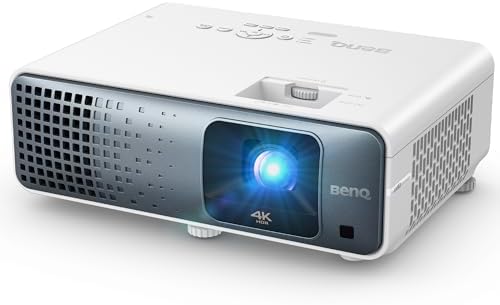
BenQ TK710
Best for: Console and PC gamers who want a big 4K picture with lag low enough for competitive play.
#5 in our rankings · Best bright-room 4K

Optoma UHD38
Best for: Living rooms with ambient light, and gamers who want 4K detail plus low lag.
Our recommendation
Buy the BenQ TK710 if you want laser light, instant on-off, and the most complete gaming package. Buy the Optoma UHD38 if your room has ambient light and you want maximum brightness and true 4K at a lower tier, accepting a lamp.
Light source
The BenQ uses a laser with instant on-off and long life. The Optoma uses a lamp, which needs warm-up and eventual replacement, but delivers more brightness for less money.
Brightness
The Optoma is brighter at 4,000 lumens against the BenQ's 3,200, so it holds up better in rooms with lamps on. Both are bright enough for a dim living room.
Gaming and features
Both offer 4.2ms lag at 1080p240Hz and 4K HDR. The BenQ adds eARC audio return and lens shift for easier placement, while the Optoma counters with a lower tier and a larger maximum image.
Choose BenQ TK710 if…
- You want laser longevity and instant on-off
- You value eARC and lens shift for setup
- Gaming is the main use and budget stretches to premium
Choose Optoma UHD38 if…
- Your room has ambient light and brightness matters most
- You want true 4K and low lag at a lower tier
- You accept lamp replacement as part of the deal
Spec-by-spec comparison
| Spec | BenQ TK710 | Optoma UHD38 |
|---|---|---|
| Price tier | Premium | Mid-range |
| Resolution | 4K with HDR10 and HLG | True 4K with HDR10 and HLG |
| Light source | Laser, 3,200 lumens | - |
| Gaming lag | 4.2ms at 1080p240Hz, 16ms at 4K60 | 4.2ms at 1080p240Hz |
| Placement | 1.3x zoom with vertical lens shift | - |
| Audio | eARC audio return | - |
| Brightness | - | 4,000 lumens, lamp light source |
| Image size | - | Up to 300 inches |
| Inputs | - | HDMI for console, PC, and streaming devices |
| Best for | Console and PC gamers who want a big 4K picture with lag low enough for competitive play. | Living rooms with ambient light, and gamers who want 4K detail plus low lag. |
| Skip if | You mainly watch films in a dark room and would rather spend less, or you want built-in smart TV apps. | You want a laser light source, or you need built-in streaming apps. |
Strengths and limitations
BenQ TK710
Strengths
- Input lag of 4.2ms at 1080p240Hz and 16ms at 4K60 is among the lowest of any projector in this guide, so fast games feel immediate.
- At 3,200 lumens the laser picture stays punchy in rooms that are not fully dark, and HDR10 and HLG support suits films and games alike.
- Vertical lens shift, 1.3x zoom, and eARC audio return make placement and soundbar connection straightforward.
Limitations
- No built-in smart TV platform of note, so streaming needs an external stick or box.
- Built-in speakers are a backup rather than a film-night solution, so a sound system is expected.
- Premium pricing reflects the gaming focus; film-only buyers get similar picture quality for less from the Epson 2350.
Optoma UHD38
Strengths
- At 4,000 lumens it is the brightest projector in this guide, so the picture holds up better than rivals in rooms with lamps on or curtains open.
- True 4K resolution with HDR10 and HLG gives sharp, detailed images for films and sport on large screens.
- Gaming lag of 4.2ms at 1080p240Hz keeps fast games responsive, and images up to 300 inches suit dedicated media rooms.
Limitations
- Lamp light source means warm-up time and eventual replacement, unlike laser rivals.
- No built-in smart TV platform, so streaming needs an external device.
- Fan noise is more noticeable at full brightness than on the quieter laser models, and built-in speakers are basic.
How they fit the wider field
- BenQ TK710: ranked #4 (Best for gaming) in The Best Home Projectors. Read the full BenQ TK710 review.
- Optoma UHD38: ranked #5 (Best bright-room 4K) in The Best Home Projectors.
Neither one quite right? The full rankings cover 10 picks matched to different buyers.
Made your call?
Questions, answered
Which is faster for gaming?
Both quote 4.2ms at 1080p240Hz, so neither has a meaningful lag advantage. The choice comes down to light source, brightness, and tier.
Is laser worth the extra cost?
For heavy daily use, yes: no lamp replacements, instant on-off, and consistent colour over time. For occasional use, a lamp model such as the UHD38 is the better value.
Which is better for films?
Both are strong 4K film projectors. The BenQ's laser gives more consistent colour, while the Optoma's extra brightness helps in rooms that are not fully dark.