Best of
The Best Computer Speakers (2026)
The best computer speakers of 2026: Edifier R1700BT, Logitech Z623, Klipsch ProMedia 2.1, Kanto YU2, and more, compared on sound, footprint, and connectivity.
Our top picks at a glance
Best overall
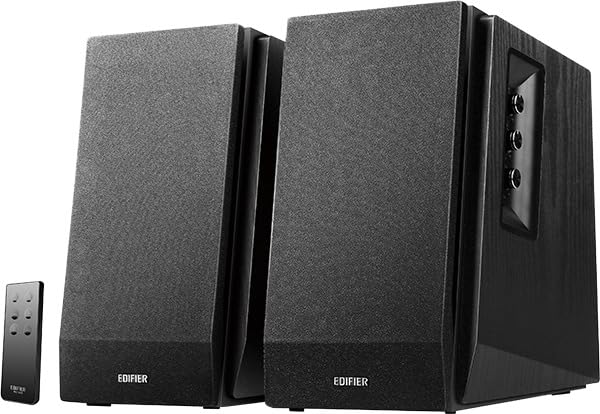 Edifier R1700BT, Black
Listeners who want one pair for a desk and a small room, with Bluetooth for a phone and wired inputs for a computer.
Best THX-certified 2.1 system
 Logitech Z623
Film and game lovers who want room-filling sound and deep bass from a desk system without buying separates.
Best 2.1 system for films and games
 Klipsch ProMedia 2.1
Buyers who want an exciting, detailed 2.1 system for films and games, and who value a design that has stayed in production for good reason.
For most buyers, the Edifier R1700BT is the pick: it sounds full, takes Bluetooth and wired sources, and can gain a subwoofer later. Film and game lovers should buy the Logitech Z623 or the Klipsch ProMedia 2.1, small-desk buyers the Creative Pebble V3 or the Kanto YU2, and anyone who wants a wireless dial with their bass the Logitech Z407.
The picks, ranked
| Pick | Configuration | Power | Drivers | Buy |
|---|---|---|---|---|
| Best overallEdifier R1700BT, Black | 2.0 powered bookshelf pair | 66W RMS total | 4-inch mid-range and bass drivers, 0.75-inch silk dome tweeters | Check price |
| Best THX-certified 2.1 systemLogitech Z623 | 2.1 system with separate subwoofer | 200W RMS, 400W peak | - | Check price |
| Best 2.1 system for films and gamesKlipsch ProMedia 2.1 | 2.1 system with separate subwoofer | - | - | Check price |
 Best valueEdifier R1280DBs, Wood Grain | 2.0 powered bookshelf pair | 42W RMS total | 4-inch woofers, 0.5-inch tweeters | Check price |
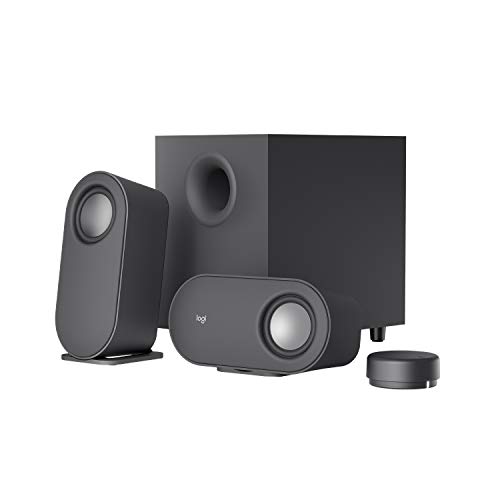 Best Bluetooth 2.1 systemLogitech Z407 | 2.1 system with down-firing subwoofer | 80W peak, 40W RMS | - | Check price |
 Best budgetCreative Pebble V3 | 2.0 USB desktop pair | 8W RMS, 16W peak | 2.25-inch full-range drivers, custom tuned | Check price |
 Best simple plug-and-play pairBose Companion 2 Series III | 2.0 multimedia pair | - | - | Check price |
 Best compact audiophile pairKanto YU2, Gloss Black | 2.0 powered desktop pair | 100W peak, 50W RMS total | 3-inch composite woofers, 0.75-inch silk dome tweeters | Check price |
 Best gaming speakersRazer Nommo Chroma | 2.0 full-range gaming pair | - | 3-inch custom woven glass fibre full-range drivers | Check price |
 Best design statementHarman Kardon SoundSticks 4, White | 2.1 system with transparent dome subwoofer | - | - | Check price |
Best overall
Edifier R1700BT, Black
The desk-and-room pair: bigger drivers, Bluetooth, and a sound that fills more than the space in front of a monitor.
Strengths
- The larger cabinets and 4-inch drivers give music a fullness that compact USB pairs cannot match, with bass that sounds present rather than implied.
- Bluetooth plus wired inputs cover a computer, a phone, and a second source without swapping cables, and the included remote keeps volume and input changes within reach.
- The wooden enclosures look like proper bookshelf speakers rather than computer accessories, so the pair suits a living room shelf as well as a desk.
Limitations
- No subwoofer is included, so bass lovers who want deep film rumble will need to add one through the subwoofer output or choose a 2.1 system instead.
- The cabinets are wide for a crowded desk, and they sound best with some space around them rather than pushed hard against a wall.
- There is no USB audio input, so a computer connects over analogue or Bluetooth rather than a direct digital link.
What owners report
Commonly praised
- Owners praise the full and warm sound that fills a desk and a small room without strain
- Owners praise the easy Bluetooth pairing that makes phone playback feel effortless
- Owners praise the wooden cabinets that look like proper bookshelf speakers rather than computer accessories
Common complaints
- Owners complain that the wide cabinets crowd smaller desks and leave little room for anything else
- Owners complain about the missing USB audio input when connecting a computer directly
- Owners complain that the rear connections are awkward to reach once the pair is placed against a wall
Recurring themes from owner reviews on retailers and forums, summarised by our editors. Updated October 2026.
| Configuration | 2.0 powered bookshelf pair |
|---|---|
| Power | 66W RMS total |
| Drivers | 4-inch mid-range and bass drivers, 0.75-inch silk dome tweeters |
| Connectivity | Bluetooth, dual RCA and 3.5mm analogue inputs |
| Extras | Subwoofer output, wireless remote control |
Best for: Listeners who want one pair for a desk and a small room, with Bluetooth for a phone and wired inputs for a computer.
Skip if: Your desk is very small, since these bookshelf cabinets need real width and depth, or you want a subwoofer in the box.
Best THX-certified 2.1 system
Logitech Z623
The long-serving 2.1 workhorse: THX-certified sound, a hefty subwoofer, and controls exactly where your hand expects them.
Strengths
- THX certification means the system is tuned to a recognised standard rather than boosted for showroom effect, so films sound balanced at both low and high volume.
- The subwoofer gives action scenes and game soundtracks a weight that no compact 2.0 pair can reproduce, while the satellites stay clear on dialogue.
- Volume, bass, and power sit on the right satellite, with a headphone jack beside them, so late-night listening needs no reach behind the desk.
Limitations
- Wired inputs only, so a phone connects by cable, and there is no Bluetooth for quick wireless listening.
- The subwoofer is large and heavy for a small room, and it needs floor space that a compact desk setup may not have.
- The styling is functional rather than handsome, and the satellites look like computer speakers rather than furniture.
What owners report
Commonly praised
- Owners praise the deep and punchy bass that gives films and games a cinema-like weight
- Owners praise the clear dialogue that stays intelligible even during loud action scenes
- Owners praise the satellite volume and bass controls that are easy to reach mid-film
Common complaints
- Owners complain that the subwoofer is bulky and hard to place in a small room
- Owners complain about the lack of Bluetooth for quick wireless listening from a phone
- Owners complain that the plain black styling looks functional rather than attractive on a tidy desk
Recurring themes from owner reviews on retailers and forums, summarised by our editors. Updated October 2026.
| Configuration | 2.1 system with separate subwoofer |
|---|---|
| Power | 200W RMS, 400W peak |
| Certification | THX certified |
| Inputs | 3.5mm and RCA, up to three sources |
| Controls | Volume, bass, and power on the right satellite, plus headphone output |
Best for: Film and game lovers who want room-filling sound and deep bass from a desk system without buying separates.
Skip if: You have no floor space for a subwoofer, or you need Bluetooth, since this is a wired-only system.
Best 2.1 system for films and games
Klipsch ProMedia 2.1
The horn-loaded classic: lively, detailed satellites and a subwoofer that has outlasted generations of rivals.
Strengths
- The horn-loaded tweeters give dialogue and effects unusual clarity for a desk system, so voices stay intelligible even during busy scenes.
- The subwoofer adds genuine weight to films and games without muddying the satellites, and its level is adjustable from the control pod.
- The control pod puts volume, subwoofer level, and a headphone jack on the desk, which is more convenient than rear-panel controls.
Limitations
- The lively tuning can sound bright on already bright recordings, and treble-sensitive listeners may prefer the warmer Edifier pairs here.
- There is no Bluetooth and no remote, so every adjustment means reaching for the control pod.
- The satellites and subwoofer need more desk and floor space than a compact 2.0 pair, which rules out the smallest setups.
What owners report
Commonly praised
- Owners praise the crisp horn-loaded treble that keeps voices sharp and detailed
- Owners praise the adjustable subwoofer that lets bass be tuned to the room
- Owners praise the desktop control pod that puts volume and a headphone jack within easy reach
Common complaints
- Owners complain that the bright tuning can feel harsh on already bright recordings
- Owners complain about the absence of Bluetooth and a remote control
- Owners complain that the control pod cable limits where the pod can sit on a large desk
Recurring themes from owner reviews on retailers and forums, summarised by our editors. Updated October 2026.
| Configuration | 2.1 system with separate subwoofer |
|---|---|
| Certification | THX certified |
| Satellites | Two-way design with horn-loaded tweeters |
| Inputs | 3.5mm analogue input |
| Controls | Desktop control pod with volume, subwoofer level, and headphone output |
Best for: Buyers who want an exciting, detailed 2.1 system for films and games, and who value a design that has stayed in production for good reason.
Skip if: You need Bluetooth, or you want a restrained, neutral sound, since this system leans lively and forward.
Best value
Edifier R1280DBs, Wood Grain
The value bookshelf pair: Bluetooth, optical input, and a subwoofer output at a price that embarrasses bigger names.
Strengths
- Bluetooth, optical, and dual analogue inputs cover a computer, a television, and a phone, which is rare breadth at this level.
- The subwoofer output means the pair can grow: add a subwoofer later instead of replacing the whole system when bass starts to matter.
- The wood-grain cabinets and front-facing controls look considered on a desk, and the remote covers volume, mute, and input switching.
Limitations
- Bass is polite rather than powerful on its own, so film lovers should budget for a subwoofer or choose a 2.1 system from the start.
- The smaller drivers cannot fill a large room the way the R1700BT pair can, and they sound best at desk distance.
- The side-panel controls are fiddly to reach once the speakers are placed, so most owners end up relying on the remote.
What owners report
Commonly praised
- Owners praise the wide choice of inputs that covers a computer, television, and phone at once
- Owners praise the warm and balanced sound that suits long listening sessions
- Owners praise the subwoofer output that leaves a simple upgrade path for deeper bass
Common complaints
- Owners complain that bass on its own feels polite and underpowered for films
- Owners complain that the side-panel controls are hard to reach once the speakers are in place
- Owners complain that the remote feels light and less solid than the speakers themselves
Recurring themes from owner reviews on retailers and forums, summarised by our editors. Updated October 2026.
| Configuration | 2.0 powered bookshelf pair |
|---|---|
| Power | 42W RMS total |
| Drivers | 4-inch woofers, 0.5-inch tweeters |
| Connectivity | Bluetooth, optical, dual RCA and 3.5mm analogue inputs |
| Extras | Subwoofer line output, wireless remote control |
Best for: Buyers who want bookshelf sound, Bluetooth, and a subwoofer upgrade path, without paying for the larger R1700BT cabinets.
Skip if: You need deep bass without adding a subwoofer, since these smaller cabinets trade low-end extension for desk fit.
Best Bluetooth 2.1 system
Logitech Z407
The modern 2.1 system: Bluetooth, a down-firing subwoofer, and a wireless dial that works from across the room.
Strengths
- Bluetooth, USB, and 3.5mm inputs cover a computer and a phone, so music moves from desk work to phone playback without replugging.
- The wireless control dial adjusts volume from across the room and runs for months on its batteries, which suits living-room desks and shared spaces.
- The oval satellites can stand upright or lie flat, and the down-firing subwoofer tucks under a desk without dominating the room.
Limitations
- Bass is present but not room-shaking, so buyers chasing the Z623 low end will find this system restrained by comparison.
- The satellites are small, and at high volume they compress sooner than the larger bookshelf pairs here.
- Setup needs a USB data cable for computer audio, which is not included in every configuration, so check the listing before ordering.
What owners report
Commonly praised
- Owners praise the wireless dial that adjusts volume comfortably from across the room
- Owners praise the neat oval satellites that fit a desk without dominating it
- Owners praise the simple Bluetooth setup that gets phone music playing in moments
Common complaints
- Owners complain that bass lacks the depth of larger 2.1 systems
- Owners complain that the satellites distort sooner than expected at high volume
- Owners complain about the missing USB data cable in some configurations that delays setup
Recurring themes from owner reviews on retailers and forums, summarised by our editors. Updated October 2026.
| Configuration | 2.1 system with down-firing subwoofer |
|---|---|
| Power | 80W peak, 40W RMS |
| Connectivity | Bluetooth 5.0, USB, and 3.5mm inputs |
| Controls | Wireless control dial with volume, play, pause, and mute |
| Satellites | Oval design, upright or horizontal placement |
Best for: Buyers who want subwoofer bass plus Bluetooth and a control dial they can use without reaching for the speakers.
Skip if: You want the raw power of the Z623, since this is a smaller, more polite system built for desks rather than rooms.
Best budget
Creative Pebble V3
The tiny desk fix: one USB-C cable, Bluetooth, and a sound far bigger than the spheres suggest.
Strengths
- A single USB-C cable carries both power and audio from a computer, so setup is one cable and nothing else to configure.
- Bluetooth adds phone playback without a cable, which is unusual in a pair this small and this affordable.
- The raised, angled spheres aim sound up towards the listener, which helps voices and video calls sound clear at a desk.
Limitations
- Bass is limited by the small drivers, so music sounds thin on tracks that rely on low end, and there is no subwoofer output.
- Volume suits a desk, not a room, and pushing the pair hard makes the sound congested rather than louder in a useful way.
- The linking cable between the spheres is fixed in length, so very wide monitor setups may need to plan placement around it.
What owners report
Commonly praised
- Owners praise the single-cable USB setup that takes almost no time at all
- Owners praise the surprisingly spacious sound from such tiny spheres
- Owners praise the angled design that aims voices clearly towards the listener
Common complaints
- Owners complain that bass is thin and unsatisfying on music that relies on low end
- Owners complain that maximum volume suits a desk only and not a room
- Owners complain that the fixed link cable restricts placement on very wide monitor setups
Recurring themes from owner reviews on retailers and forums, summarised by our editors. Updated October 2026.
| Configuration | 2.0 USB desktop pair |
|---|---|
| Power | 8W RMS, 16W peak |
| Drivers | 2.25-inch full-range drivers, custom tuned |
| Connectivity | USB-C audio, Bluetooth 5.0, 3.5mm analogue input |
| Extras | Clear dialog enhancement mode, USB-A converter included |
Best for: Small desks, laptops, and anyone whose monitor speakers are the current problem and who wants a simple, cheap cure.
Skip if: You want deep bass or room-filling volume, since these small spheres are built for near-field listening, not parties.
Best simple plug-and-play pair
Bose Companion 2 Series III
The no-fuss pair: two inputs, one volume knob, and a warm, easy sound that has stayed in production for good reason.
Strengths
- Dual inputs let a computer and a second device stay connected at once, so switching sources means no cable swapping.
- The sound is warm and forgiving, which suits long workdays, video calls, and background music without listening fatigue.
- Setup is genuinely instant: one power cable, one audio cable, and a volume knob on the right speaker, with a headphone jack beside it.
Limitations
- No Bluetooth and no remote, so wireless listening and across-the-room control are simply not available.
- Bass is modest, and there is no subwoofer output, so the pair cannot grow into a fuller system later.
- The design has barely changed in years, which long-time fans see as reliability and style-conscious buyers may see as dated.
What owners report
Commonly praised
- Owners praise the instant setup that needs nothing beyond plugging in two cables
- Owners praise the warm and forgiving sound that stays pleasant across a long workday
- Owners praise the second input that keeps a phone connected alongside the computer
Common complaints
- Owners complain about the lack of Bluetooth in a pair at this level
- Owners complain that bass stays modest with no way to add a subwoofer
- Owners complain that the long-unchanged design looks dated beside newer rivals
Recurring themes from owner reviews on retailers and forums, summarised by our editors. Updated October 2026.
| Configuration | 2.0 multimedia pair |
|---|---|
| Inputs | Dual inputs: computer input plus 3.5mm auxiliary input |
| Controls | Volume knob on the right speaker |
| Extras | Headphone output on the right speaker |
| Placement | Compact cabinets suited to either side of a monitor |
Best for: Buyers who want better sound than monitor speakers with zero learning curve, and who value a second input for a phone or tablet.
Skip if: You need Bluetooth, a subwoofer, or a remote, since this pair deliberately offers none of those.
Best compact audiophile pair
Kanto YU2, Gloss Black
The compact audiophile pair: a built-in USB DAC, a clean front baffle, and a subwoofer output for later.
Strengths
- The built-in USB DAC takes digital audio straight from a computer, bypassing the noisy analogue output that blights many laptop headphone jacks.
- The clean front baffle, with no visible screws, looks refined on a design-led desk, and the gloss finish suits modern setups.
- The subwoofer output includes a high-pass filter that relieves the small drivers of deep bass once a subwoofer is connected, which keeps mids and highs cleaner.
Limitations
- No Bluetooth, so phone playback needs a cable, which feels like an omission at this level.
- Bass on its own is limited, and the pair really needs a subwoofer to sound full, which adds cost beyond the headline pair.
- The rear volume knob is awkward to reach once the speakers are placed, so most owners set it once and control volume from the computer.
What owners report
Commonly praised
- Owners praise the clean USB sound that removes hiss from noisy laptop outputs
- Owners praise the detailed and neutral tuning that suits careful music listening
- Owners praise the tidy front baffle that looks refined on a design-led desk
Common complaints
- Owners complain that the pair sounds thin without a subwoofer attached
- Owners complain about the missing Bluetooth for casual phone playback
- Owners complain that the rear volume knob is awkward to reach after placement
Recurring themes from owner reviews on retailers and forums, summarised by our editors. Updated October 2026.
| Configuration | 2.0 powered desktop pair |
|---|---|
| Power | 100W peak, 50W RMS total |
| Drivers | 3-inch composite woofers, 0.75-inch silk dome tweeters |
| Connectivity | USB DAC input, 3.5mm auxiliary input |
| Extras | Subwoofer output with 80Hz high-pass filter |
Best for: Music lovers with a small desk who want a neutral, detailed sound and a direct USB link that bypasses a noisy headphone jack.
Skip if: You need Bluetooth, since this pair is wired only, or you want bass without adding a subwoofer.
Best gaming speakers
Razer Nommo Chroma
The gaming desk pair: custom woven drivers, rear bass ports, and lighting that matches the rest of a gaming setup.
Strengths
- The custom woven glass fibre drivers and rear-facing bass ports give games a full, punchy sound with more low-end weight than typical compact pairs.
- The bass knob with automatic gain control sits on the desk, so bass can be tuned mid-game without opening software.
- Chroma lighting syncs with other Razer gear, which matters to gamers building a matched setup, and it can be switched off for plain work use.
Limitations
- The cylindrical cabinets are tall for a desk, and they need clearance behind them for the rear bass ports to work properly.
- Full lighting control needs Razer software, which adds a background utility that non-gamers may not want installed.
- There is no Bluetooth and no subwoofer output, so the pair cannot grow into a wireless or 2.1 system later.
What owners report
Commonly praised
- Owners praise the punchy game sound that gives effects real presence
- Owners praise the desk bass knob that allows quick tuning without opening software
- Owners praise the lighting that matches the rest of a gaming setup attractively
Common complaints
- Owners complain that the tall cabinets need clearance behind them for the rear ports
- Owners complain that full lighting control requires extra software running in the background
- Owners complain about the lack of a subwoofer option for deeper film bass
Recurring themes from owner reviews on retailers and forums, summarised by our editors. Updated October 2026.
| Configuration | 2.0 full-range gaming pair |
|---|---|
| Drivers | 3-inch custom woven glass fibre full-range drivers |
| Bass | Rear-facing bass ports, bass knob with automatic gain control |
| Connectivity | USB audio and 3.5mm analogue input |
| Extras | Customisable Chroma RGB lighting, headphone output |
Best for: PC gamers who want a pair built for games, with a bass knob on the desk and lighting that joins a wider gaming setup.
Skip if: You dislike gaming styling or lighting, or you want a subwoofer, since this is a 2.0 pair without one.
Best design statement
Harman Kardon SoundSticks 4, White
The design statement: a transparent dome subwoofer, slim satellites, and Bluetooth, for desks where looks matter as much as sound.
Strengths
- The transparent dome subwoofer is genuinely distinctive, and the slim satellites take up little desk width for a 2.1 system.
- Bluetooth streaming from a phone is simple and stable, so the system doubles as a room speaker when the computer is off.
- The sound is clear and spacious for a desk system, with the subwoofer adding warmth that the slim satellites could not manage alone.
Limitations
- The transparent dome shows dust quickly, so the subwoofer needs regular wiping to keep its showpiece look.
- There is no remote, and volume control sits on a satellite, so across-the-room adjustment means walking to the desk.
- The premium styling carries a premium outlay, and buyers who only care about sound get more performance per spend from the Z623 or Klipsch systems.
What owners report
Commonly praised
- Owners praise the striking transparent subwoofer that draws compliments from visitors
- Owners praise the clear and spacious sound that belies the slim satellites
- Owners praise the straightforward Bluetooth pairing with phones and tablets
Common complaints
- Owners complain that the transparent dome shows dust and needs frequent wiping
- Owners complain about the lack of a remote for across-the-room volume changes
- Owners complain that the premium styling costs more than the sound alone would justify
Recurring themes from owner reviews on retailers and forums, summarised by our editors. Updated October 2026.
| Configuration | 2.1 system with transparent dome subwoofer |
|---|---|
| Connectivity | Bluetooth and 3.5mm analogue input |
| Satellites | Slim transparent-styled satellite pair |
| Subwoofer | Down-firing dome subwoofer |
| Controls | Touch-style controls on the satellite |
Best for: Buyers who want a 2.1 system that looks like a piece of design, with Bluetooth for a phone and a subwoofer for films.
Skip if: You want a plain, understated desk, since the transparent subwoofer is made to be noticed, or you need a remote control.
How we chose
Near-field sound first
Computer speakers are heard from arm's length, so we weighted clarity at low volume, voice intelligibility, and freedom from harshness over maximum loudness. A pair that only sounds good loud fails the desk test, where most listening happens quietly.
Desk footprint, honestly measured
Satellite width, cabinet depth, and subwoofer floor space were treated as real costs, not footnotes. A superb pair that crowds a monitor or forces a subwoofer into a walkway loses marks against a slightly lesser pair that actually fits.
Connectivity that matches real desks
We credited pairs that cover the sources people actually use: a computer over USB or analogue, a phone over Bluetooth, and a second device over a spare input. Single-input pairs were penalised unless their simplicity was the whole point, as with the Bose pair.
Bass, stated as a system cost
A 2.0 pair without a subwoofer output has a fixed bass ceiling, while a pair with one can grow. We compared the cost of reaching satisfying bass, not just the cost of the pair in the box, which changes several rankings versus a bare pair-price comparison.
Questions, answered
Do I need a subwoofer with computer speakers?
Not always. For music, calls, and video at a desk, a good 2.0 pair like the Edifier R1700BT or Kanto YU2 is enough. For films and games, a subwoofer adds weight that small drivers cannot fake, so a 2.1 system like the Logitech Z623 or Klipsch ProMedia 2.1 is the better buy, or choose a pair with a subwoofer output and add one later.
Is Bluetooth or USB better for computer speakers?
USB is better for a computer, since it carries digital audio directly and avoids the analogue noise of a headphone jack. Bluetooth is better for a phone, since it needs no cable. The ideal desk pair offers both, as the Edifier bookshelf pairs and the Logitech Z407 do, so each source uses its best link.
Where should I place computer speakers?
At ear height, angled slightly towards you, with equal distance from each speaker to your head, forming a triangle. Keep rear-ported speakers a little away from the wall, keep a subwoofer on the floor rather than on the desk, and avoid placing a speaker directly beside a monitor that blocks its tweeter.