Podcasting
The Best USB Microphones for Podcasting (2026)
The best USB microphones for podcasters, prioritizing voice clarity, room-noise rejection, and upgrade paths.
Our top picks at a glance
Best for podcasting
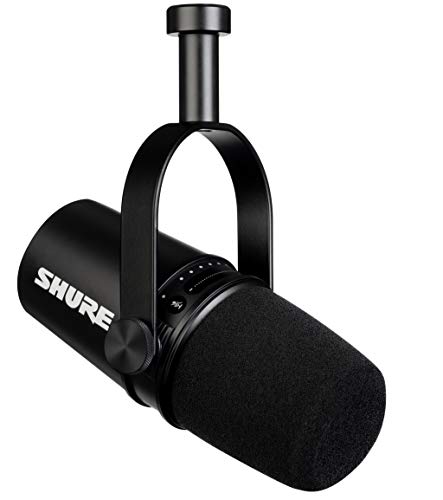 Shure MV7
Podcasters in untreated rooms who want professional sound and an upgrade path.
Best for multi-person shows
 Blue Yeti X
Creators who want one flexible mic for voice, interviews, and music.
Podcasters should start with the Shure MV7, whose dynamic capsule and voice-tuned processing deliver broadcast-style sound even in untreated rooms. The Blue Yeti X suits interview formats with its bidirectional pattern, and the Fifine K688 is the smart budget entry into dynamic mics.
The picks, ranked
| Pick | Capsule | Outputs | Pattern | Buy |
|---|---|---|---|---|
| Best for podcastingShure MV7 | Dynamic, voice-tuned | USB and XLR (hybrid) | Cardioid | Check price |
| Best for multi-person showsBlue Yeti X | 4-capsule condenser array | — | — | Check price |
 Best budgetFifine K688 | Dynamic | USB and XLR (hybrid) | Cardioid | Check price |
Best for podcasting
Shure MV7
Broadcast voice with a USB/XLR future.
Strengths
- Dynamic capsule with excellent room rejection
- USB and XLR outputs
- Voice-tuned DSP and auto-level mode
- Rich, broadcast-style sound
Limitations
- Premium pricing
- Wants close mic technique
- Single cardioid pattern
What owners report
Commonly praised
- Warm, clear vocal sound that owners say holds up for years
- Both USB and XLR outputs give it room to grow
- It rejects background noise well when used close up
Common complaints
- It must be used very close to the mouth or the sound thins out
- Touch controls can be triggered by accident
- The cable connection feels flimsy, and no stand or shock mount is included
Recurring themes from owner reviews on retailers and forums, summarised by our editors. Updated October 2026.
| Capsule | Dynamic, voice-tuned |
|---|---|
| Outputs | USB and XLR (hybrid) |
| Pattern | Cardioid |
| DSP | Voice Isolation Technology, auto-level mode |
| Monitoring | Headphone output with zero-latency monitoring |
Best for: Podcasters in untreated rooms who want professional sound and an upgrade path.
Skip if: You need multiple pickup patterns or the absolute lowest price.
Best for multi-person shows
Blue Yeti X
The versatile creator standard.
Strengths
- Four switchable pickup patterns
- 24-bit/48 kHz recording
- Live LED level meter for easy gain setting
- Zero-latency headphone monitoring
Limitations
- Picks up room noise like all condensers
- No shock mount included
- Bulky on smaller desks
What owners report
Commonly praised
- Clear, detailed voice sound for a USB microphone
- The LED level meter and multiple pickup patterns are handy
- Easy to set up with no extra interface needed
Common complaints
- The USB connection is a weak point and can break if knocked
- Some owners report random disconnects from the computer
- It picks up a lot of room noise, and support experiences are mixed
Recurring themes from owner reviews on retailers and forums, summarised by our editors. Updated October 2026.
| Capsule | 4-capsule condenser array |
|---|---|
| Resolution | 24-bit / 48 kHz |
| Pickup patterns | Cardioid, bidirectional, omnidirectional, stereo |
| Controls | Multi-function smart knob, LED meter |
| Connection | USB |
Best for: Creators who want one flexible mic for voice, interviews, and music.
Skip if: Your room is noisy and you record solo; consider a dynamic mic.
Best budget
Fifine K688
Dynamic clarity on a budget.
Strengths
- Dynamic capsule rejects room noise
- USB and XLR outputs
- Tap-to-mute and gain control onboard
- Excellent value
Limitations
- Less refined highs than premium dynamics
- Basic included stand
- Plastic-heavy build
| Capsule | Dynamic |
|---|---|
| Outputs | USB and XLR (hybrid) |
| Pattern | Cardioid |
| Controls | Tap-to-mute, gain knob, headphone volume |
| Monitoring | Headphone output |
Best for: Budget creators who want dynamic room rejection and XLR for later.
Skip if: You want the finest high-frequency detail or premium build.
Questions, answered
Is a dynamic or condenser mic better for podcasting?
Dynamic, in most home setups. Condensers sound wonderful in treated studios but reveal every room flaw. Dynamics forgive echo, keyboard clicks, and street noise.
Do I need a pop filter?
Yes, or a foam windscreen. Plosive pops from P and B sounds are distracting, and most mics benefit from something between your mouth and the capsule.
Should two hosts share one microphone?
It works with a bidirectional pattern like the Yeti X offers, but separate mics give far better control in editing. One mic per voice is the professional standard.