Head to head
TP-Link RE315 vs TP-Link RE220 (2026)
TP-Link RE315 vs RE220: AC1200 against AC750, compared honestly for a single dead room.
#1 in our rankings · Best overall value

TP-Link AC1200 WiFi Extender (RE315)
Best for: Small homes and apartments with one dead room, where a simple, inexpensive extender is enough.
#4 in our rankings · Best budget extender
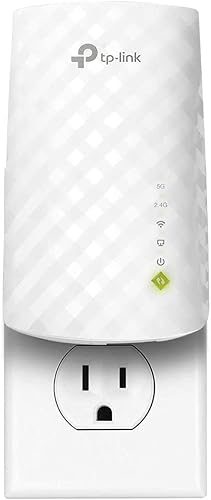
TP-Link AC750 WiFi Extender (RE220)
Best for: Renters and light users who need one room usable again at the lowest outlay.
Our recommendation
Buy the TP-Link RE315 if the dead room is used for streaming, calls, or work, since its AC1200 radio, adjustable antennas, and EasyMesh support give it real headroom. Buy the TP-Link RE220 only if the room is used lightly and the lowest outlay is the priority. Both fix one room; the RE315 fixes it more convincingly.
Speed class and antennas
The RE315 is AC1200 with two adjustable external antennas, while the RE220 is AC750 with internal antennas. In a room where the router signal is already weak, the RE315 has both a faster radio and a better way to aim it, which is why it holds up better under streaming load.
Coverage and capacity
The RE315 lists added coverage up to 1,600 sq ft and up to 32 devices, against up to 1,200 sq ft and up to 30 devices for the RE220. The gap is modest on paper, but combined with the antenna advantage it makes the RE315 the safer pick for a room at the edge of coverage.
Mesh support
The RE315 supports EasyMesh with a compatible router, while the RE220 supports OneMesh with a compatible TP-Link router. Both give one network name in the right setup, but EasyMesh is the broader, newer standard, which favours the RE315 for buyers who may change routers later.
Choose TP-Link AC1200 WiFi Extender (RE315) if…
- You stream or work in the dead room
- You want adjustable antennas to aim the signal
- You want EasyMesh support for a future router
Choose TP-Link AC750 WiFi Extender (RE220) if…
- The room is used only lightly
- The lowest outlay matters most
- You want the smallest possible plug
Spec-by-spec comparison
| Spec | TP-Link AC1200 WiFi Extender (RE315) | TP-Link AC750 WiFi Extender (RE220) |
|---|---|---|
| Price tier | Budget | Budget |
| Speed class | AC1200: 867 Mbps on 5 GHz, 300 Mbps on 2.4 GHz | AC750: 433 Mbps on 5 GHz, 300 Mbps on 2.4 GHz |
| Added coverage | Up to 1,600 sq ft | Up to 1,200 sq ft |
| Devices | Up to 32 devices | Up to 30 devices |
| Ethernet | 1 Fast Ethernet port | 1 Fast Ethernet port |
| Antennas | 2 external, adjustable | - |
| Mesh | EasyMesh compatible | OneMesh compatible |
| Size | - | 3.0 by 4.3 inches, 0.2 lb |
| Best for | Small homes and apartments with one dead room, where a simple, inexpensive extender is enough. | Renters and light users who need one room usable again at the lowest outlay. |
| Skip if | You need a Gigabit Ethernet port, WiFi 6, or coverage for several weak rooms at once. | You stream 4K in the dead room, game online there, or connect many devices through the extender. |
Strengths and limitations
TP-Link AC1200 WiFi Extender (RE315)
Strengths
- Two adjustable external antennas help aim the rebroadcast signal toward the dead room, rather than relying on a fixed internal antenna.
- EasyMesh compatibility lets the RE315 join a compatible router under one network name, so devices can roam without manual network switching.
- Access point mode turns a wired connection in the dead room into a local WiFi hotspot, which suits rooms that already have an Ethernet run.
Limitations
- The Ethernet port is Fast Ethernet, so a wired device connected through it is capped well below Gigabit speeds.
- AC1200 WiFi 5 speeds are adequate for browsing and streaming, but the unit cannot take advantage of a WiFi 6 or WiFi 7 router.
- Coverage suits one room or a small area, not a whole floor, so buyers with several dead zones need a stronger model or a mesh system.
TP-Link AC750 WiFi Extender (RE220)
Strengths
- The small wall-plug body sits in a single outlet and is easy to move to a better spot if the first placement underperforms.
- OneMesh support pairs it with a compatible TP-Link router under one network name, avoiding a second network to manage.
- High Speed mode can dedicate one band to the router link and the other to devices, which helps keep the extended signal steady.
Limitations
- AC750 throughput is the lowest here, so 4K streaming and large downloads in the extended room will feel the limit first.
- The Fast Ethernet port caps wired connections, so it is not the right way to wire a desktop or console for speed.
- A single small unit with internal antennas cannot rescue a room that is far from the router or behind thick walls.
How they fit the wider field
- TP-Link AC1200 WiFi Extender (RE315): ranked #1 (Best overall value) in The Best WiFi Extenders. Read the full TP-Link AC1200 WiFi Extender (RE315) review.
- TP-Link AC750 WiFi Extender (RE220): ranked #4 (Best budget extender) in The Best WiFi Extenders.
Neither one quite right? The full rankings cover 10 picks matched to different buyers.
Made your call?
Questions, answered
Which is better for a bedroom?
The RE315, for most bedrooms, since streaming and video calls benefit from its faster radio and antennas. The RE220 suits a spare bedroom or a room used only for browsing.
Do both work with any router?
Yes, both work as standalone extenders with any standard router. Their mesh features need compatible routers, but neither unit depends on mesh to do its basic job.
Is the RE220 too slow in 2026?
Not for light use, but AC750 is the floor of this list, and it shows under load. Buyers who are unsure should default to the RE315, since the step up covers far more uses.