In-depth review
Fluance RT85 Review (2026)
In-depth review of the Fluance RT85: Ortofon 2M Blue cartridge, acrylic platter, and whether it is the detail king under Technics money.
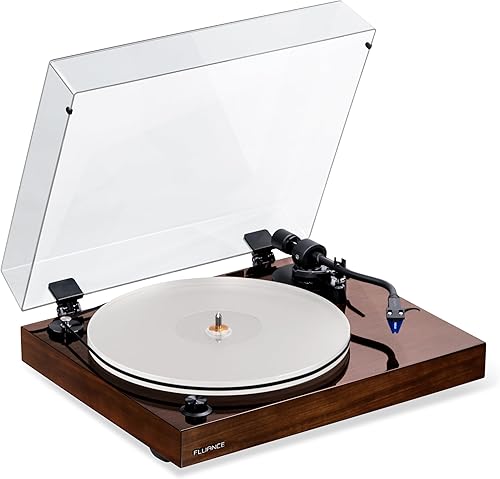
Fluance RT85
The RT81 idea taken seriously: an acrylic platter and an Ortofon 2M Blue cartridge that reveal what your records really contain.
Our verdict
The RT85 is the detail pick under Technics money, because its Ortofon 2M Blue cartridge and acrylic platter retrieve information that cheaper decks gloss over. It asks for a phono stage in return, and it offers no automation, but for listeners whose record collections deserve better than entry-level playback, it is the most revealing deck in its bracket.
What we like
- The Ortofon 2M Blue cartridge is the star here, with a nude elliptical stylus that retrieves inner detail, air, and texture that entry cartridges simply gloss over.
- The acrylic platter improves speed stability and damps resonance compared with metal platters, and it looks superb under the walnut plinth.
- Auto-stop, a solid wood plinth, and an S-shaped tonearm with adjustable counterweight make it a complete, grown-up deck rather than a stepping stone.
What to watch out for
- No built-in phono preamp, so the total system cost must include a phono stage or an amplifier with a phono input, which narrows the price gap to rivals.
- Manual belt speed change and manual cueing throughout, which suits engaged listeners but not anyone wanting push-button convenience.
- The 2M Blue stylus is a premium replacement part, so owners should budget for its eventual renewal rather than being surprised by it.
Who it is for
Listeners with a growing record collection who want to hear inner detail, and who already own or will buy a phono stage.
The 2M Blue difference
The 2M Blue's nude elliptical stylus sits deeper and more precisely in the groove than the bonded styli on cheaper cartridges, and the difference is not subtle on well-recorded vinyl. Backing vocals separate, room ambience appears, and surface noise recedes behind the music rather than competing with it. This single component explains most of the RT85's price premium over the RT81, and it is money well spent for anyone whose collection includes good pressings.
Acrylic platter and speed
The acrylic platter is heavier and better damped than the aluminium platters on cheaper Fluance decks, which improves speed stability and reduces the ringing that colours the sound. Combined with the solid wood plinth and rubber isolation feet, the deck sounds calm and composed, with bass that stays defined rather than blooming. It is a deck that rewards a solid shelf and then stops drawing attention to itself.
What you give up
There is no built-in phono stage, no Bluetooth, and no automation beyond auto-stop, so the RT85 demands a system around it rather than offering one in the box. The walnut finish is handsome, but the deck's real beauty is audible rather than visible. Buyers who want convenience should look at the RT81 Elite or the Sony PS-LX310BT, and buyers who want the last word in engineering should look at the Technics.
How it stacks up
Against the Pro-Ject Debut Carbon EVO, the RT85 wins on cartridge detail and loses on tonearm sophistication. Against the Rega Planar 1 Plus, the RT85 wins on detail retrieval and loses on rhythmic drive and built-in phono convenience. Against the Technics SL-1500C, the RT85 wins on price and cartridge class, and loses on drive engineering and long-term build.
What owners report
Commonly praised
- Ortofon 2M Blue retrieves inner detail cheaper cartridges gloss over
- Acrylic platter improves speed stability and damps ringing
- Solid wood plinth and walnut finish feel properly grown-up
Common complaints
- No built-in phono stage, so system cost rises beyond the deck
- Manual cueing and belt speed change suit engaged listeners only
- Replacement stylus costs noticeably more than entry-level styli
Recurring themes from owner reviews on retailers and forums, summarised by our editors. Updated October 2026.
Key specifications
- Drive
- Belt drive
- Speeds
- 33⅓ and 45 RPM
- Cartridge
- Ortofon 2M Blue, factory fitted
- Phono stage
- None built in; external phono input or preamp required
- Platter
- Acrylic
Also consider

Pro-Ject Debut Carbon EVO
The deck most hi-fi shops reach for first: a carbon tonearm, a proper cartridge, and nothing you do not need.
- Drive: Belt drive with electronic speed control
- Speeds: 33⅓ and 45 RPM

Technics SL-1500C, Silver
The last turntable many owners will ever buy: coreless direct drive, a superb tonearm, and build quality from another era.
- Drive: Coreless direct drive
- Speeds: 33⅓, 45, and 78 RPM
Research-based assessment. ThePickLedger has not hands-on tested this product; this evaluation synthesizes manufacturer specifications, retailer documentation, and published expert reviews.
Questions, answered
Do I need a phono preamp for the RT85?
Yes, unless your amplifier has a phono input. The RT85 has no built-in phono stage, so add a separate preamp to the system cost, and choose one that suits the 2M Blue rather than the cheapest available.
How long does the 2M Blue stylus last?
Stylus life depends on hours played and record cleanliness. Treat the stylus as a consumable: keep records clean, avoid playing visibly damaged vinyl, and replace the stylus when sound turns dull or harsh rather than waiting for damage.
Is the RT85 worth it over the RT81 Elite?
Yes, if you own good pressings and a system that reveals detail, since the cartridge and platter upgrades are audible. If your speakers are entry level or your records are mostly worn charity-shop finds, the RT81 Elite is the wiser buy.