In-depth review
Technics SL-1500C Review (2026)
In-depth review of the Technics SL-1500C: coreless direct drive, Ortofon 2M Red, and whether it justifies premium money.

Technics SL-1500C, Silver
The last turntable many owners will ever buy: coreless direct drive, a superb tonearm, and build quality from another era.
Our verdict
The SL-1500C is the deck to buy when you stop wanting to buy decks. Its coreless direct drive, damped chassis, and precision arm produce a silent, stable, unflappable sound that makes every record in a collection sound like itself. The price is serious, and the styling is functional rather than beautiful, but nothing else here combines this engineering with this ease of ownership.
What we like
- The coreless direct-drive motor eliminates cogging, so pitch stays stable and the background stays silent, which is why this drive system has survived decades of fashion changes.
- The die-cast aluminium platter, damped chassis, and precision tonearm give the deck a planted, unflappable character, even on loud, demanding pressings.
- A built-in phono stage and a factory-fitted Ortofon 2M Red cartridge mean it sounds superb immediately, while the standard headshell fitting keeps cartridge upgrades simple later.
What to watch out for
- The premium price is hard to justify next to the Fluance RT85 unless your amplifier, speakers, and record collection are already at a level to reveal the difference.
- The industrial, functional styling will not charm buyers who want their deck to look like furniture, and the cueing lever feels clinical rather than luxurious.
- Manual operation with auto-lift only, so you still walk to the deck at the end of each side, which surprises some buyers at this price.
Who it is for
Committed collectors and serious listeners who want one deck for decades, with no upgrade itch left afterwards.
Coreless drive, explained plainly
Conventional direct-drive motors cog: tiny magnetic steps that create minute speed variations. Technics' coreless motor removes the iron core that causes cogging, so rotation is smooth and pitch is stable in a way that is audible on sustained notes and quiet passages. This is not marketing language for a small improvement; it is the reason Technics decks have a reputation for sounding calm and controlled where lesser direct drives sound edgy.
Built like it means it
The two-layer damped chassis, die-cast aluminium platter, and heavy rubber mat add up to a deck that shrugs off footfall, speaker vibration, and less-than-perfect furniture. The tonearm moves with precision and stays where it is put, and the cueing feels engineered rather than assembled. Owners describe the SL-1500C as the first deck they stopped thinking about, which is the highest praise a turntable can earn.
Sound and the 2M Red
The factory-fitted Ortofon 2M Red is a lively, detailed cartridge that suits the deck's neutral character, giving rock energy and classical dynamics without harshness. The built-in phono stage is genuinely good, not a token extra, so the deck sounds complete through a line input as well as through a dedicated phono stage. Upgrading the stylus to a 2M Blue later is a simple, well-trodden path that many owners take after a year or two.
How it stacks up
Against the Pro-Ject Debut Carbon EVO, the Technics wins on drive stability, build, and longevity, while the EVO wins on price and on the charm of its carbon arm. Against the Fluance RT85, the Technics wins on engineering and speed control, while the RT85 wins on cartridge class in the box. Against the Audio-Technica AT-LP120XUSB, the Technics is the same idea executed to a far higher standard, which is exactly what the price difference buys.
What owners report
Commonly praised
- Coreless drive holds pitch with an almost silent background
- Planted, damped build shrugs off footfall and speaker vibration
- Ortofon cartridge sounds superb straight out of the box
Common complaints
- Premium price is hard to justify through modest speakers
- Industrial styling charms engineers more than interior designers
- Tonearm still needs a walk to the deck at the end of each side
Recurring themes from owner reviews on retailers and forums, summarised by our editors. Updated October 2026.
Key specifications
- Drive
- Coreless direct drive
- Speeds
- 33⅓, 45, and 78 RPM
- Cartridge
- Ortofon 2M Red, factory fitted
- Phono stage
- Built-in phono preamp
- Platter
- Die-cast aluminium, two-layer damped
Also consider

Pro-Ject Debut Carbon EVO
The deck most hi-fi shops reach for first: a carbon tonearm, a proper cartridge, and nothing you do not need.
- Drive: Belt drive with electronic speed control
- Speeds: 33⅓ and 45 RPM
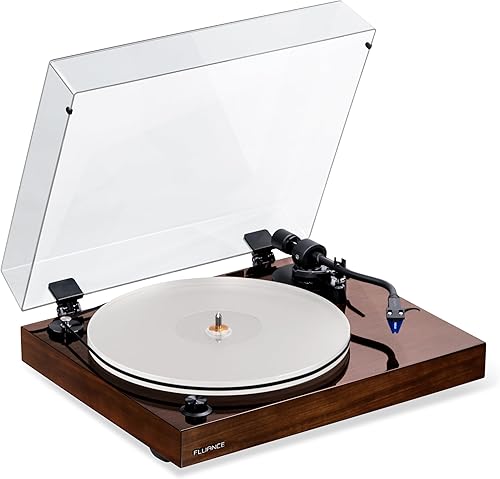
Fluance RT85
The RT81 idea taken seriously: an acrylic platter and an Ortofon 2M Blue cartridge that reveal what your records really contain.
- Drive: Belt drive
- Speeds: 33⅓ and 45 RPM
Research-based assessment. ThePickLedger has not hands-on tested this product; this evaluation synthesizes manufacturer specifications, retailer documentation, and published expert reviews.
Questions, answered
Is the SL-1500C overkill for a starter system?
Yes, honestly. Its engineering only shows its worth through capable speakers and a clean phono stage, so buyers with entry-level speakers should spend on speakers first and return to the Technics when the system can reveal it.
Does it play 78 RPM records?
Yes, it offers 33, 45, and 78 RPM speeds. Note that 78 records need a dedicated stylus, since the fitted 2M Red stylus is designed for vinyl microgroove records, not shellac 78s.
Why does it have no automatic stop?
Technics chose auto-lift at the end of a side rather than full automation, keeping the mechanism simple and the sound path clean. You still walk to the deck, but the stylus lifts itself, which protects both stylus and record.