In-depth review
Pro-Ject Debut Carbon EVO Review (2026)
In-depth review of the Pro-Ject Debut Carbon EVO: carbon tonearm, Sumiko Rainier cartridge, and whether it is still the default first hi-fi deck.

Pro-Ject Debut Carbon EVO
The deck most hi-fi shops reach for first: a carbon tonearm, a proper cartridge, and nothing you do not need.
Our verdict
The Debut Carbon EVO is the best first proper turntable, because it gets the expensive parts right and omits only conveniences. Its carbon tonearm and Sumiko cartridge deliver a composed, detailed sound that survives amplifier and speaker upgrades, which is exactly what a first hi-fi deck should do. The missing phono stage is a real extra cost, but it is the only caveat that matters, and it is stated on every listing.
What we like
- The one-piece carbon fibre tonearm is stiff and light, which keeps the stylus tracking cleanly through loud passages where cheaper metal arms smear detail.
- The factory-fitted Sumiko Rainier cartridge is a genuine step above entry-level cartridges, with a fuller midrange and a sound that suits rock, jazz, and classical alike.
- Electronic speed switching between 33 and 45 RPM avoids moving the belt by hand, and the heavy steel platter with damping keeps speed steady and resonance low.
What to watch out for
- No built-in phono preamp, so you need an amplifier or receiver with a phono input, or a separate preamp, before you hear anything.
- Manual operation throughout: you place the needle, lift it at the end of the side, and change speed from the deck, which suits engaged listeners more than casual ones.
- The walnut finish and minimalist look divide opinion, and the supplied dust cover hinges feel less substantial than the deck itself.
Who it is for
Listeners building a first hi-fi system who want a deck that improves as the rest of the system improves.
The tonearm is the story
Most decks at this price use a metal tonearm that adds its own colour to the sound. The EVO's one-piece carbon fibre arm is lighter and stiffer, which means the stylus follows the groove rather than fighting the arm's resonance. The practical result is cleaner attacks on piano and guitar, and a soundstage that stays stable when a record gets loud. It is the kind of engineering that usually appears a price bracket higher, and it is why the EVO has become a reference point for reviewers.
A cartridge you will keep
The Sumiko Rainier is not a placeholder cartridge fitted to be replaced. It has a full, even tonal balance that suits long listening sessions, and it tracks securely on records that are less than pristine. Owners who upgrade later usually do so to chase a specific flavour, not because the Rainier disappoints, which is a rare compliment for a factory-fitted cartridge.
Setup and daily use
Setup is straightforward for a manual deck: level the plinth, set the counterweight to the marked position, connect the phono stage, and play. Electronic speed switching is a genuine daily convenience, removing the belt fiddle that puts some buyers off manual decks. The manual cueing demands attention, but the damped cue lever makes it forgiving, and most owners learn it within a record or two.
How it stacks up
Against the Fluance RT85, the EVO wins on tonearm engineering and loses on cartridge class, since the 2M Blue retrieves more detail. Against the Rega Planar 1 Plus, the EVO wins on speed switching and value, while Rega wins on rhythmic drive and simplicity of character. Against the Fluance RT81 Elite, the EVO is the clear step up in sound, for a price that also requires a phono stage, so compare system costs, not deck prices.
What owners report
Commonly praised
- Carbon tonearm keeps loud passages clean and detailed
- Sumiko cartridge sounds full and easy to listen to for hours
- Electronic speed switching removes the belt-moving chore
Common complaints
- Needs a separate phono stage or a phono-equipped amplifier
- Fully manual play demands attention at the end of every side
- Dust cover hinges feel flimsy next to the rest of the deck
Recurring themes from owner reviews on retailers and forums, summarised by our editors. Updated October 2026.
Key specifications
- Drive
- Belt drive with electronic speed control
- Speeds
- 33⅓ and 45 RPM
- Cartridge
- Sumiko Rainier, factory fitted
- Tonearm
- One-piece carbon fibre, 8.6 inches
- Phono stage
- None built in; external phono input or preamp required
Also consider
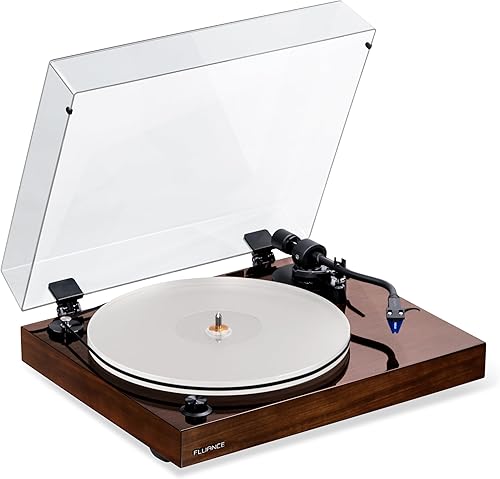
Fluance RT85
The RT81 idea taken seriously: an acrylic platter and an Ortofon 2M Blue cartridge that reveal what your records really contain.
- Drive: Belt drive
- Speeds: 33⅓ and 45 RPM

Rega Planar 1 Plus
Rega sound without the Rega setup anxiety: the Planar 1 with a phono stage built in, ready for any amplifier.
- Drive: Belt drive
- Speeds: 33⅓ and 45 RPM, manual belt change
Research-based assessment. ThePickLedger has not hands-on tested this product; this evaluation synthesizes manufacturer specifications, retailer documentation, and published expert reviews.
Questions, answered
Does the Debut Carbon EVO need a phono preamp?
Yes, unless your amplifier or receiver has a phono input. The EVO has no built-in phono stage, so budget for a separate preamp or an amplifier with phono, and count that in the system cost when comparing with decks that include one.
Is the EVO suitable for beginners?
Yes, with one reservation: it is fully manual, so beginners must learn cueing and must remember to lift the arm at the end of a side. Patient beginners manage fine, but buyers who want automation should choose the Sony PS-LX310BT or Audio-Technica AT-LP60X instead.
Can I upgrade the cartridge later?
Yes, the standard headshell fitting accepts a wide range of cartridges, and the carbon arm suits better cartridges well. Most owners upgrade the stylus or cartridge only after upgrading amplifier and speakers, since the Rainier is not the weak link in a starter system.