Head to head
Yamaha HS5 vs ADAM T5V (2026)
Yamaha HS5 vs ADAM T5V: flat dome honesty against ribbon treble detail, compared honestly.
#3 in our rankings · Best for critical mixing
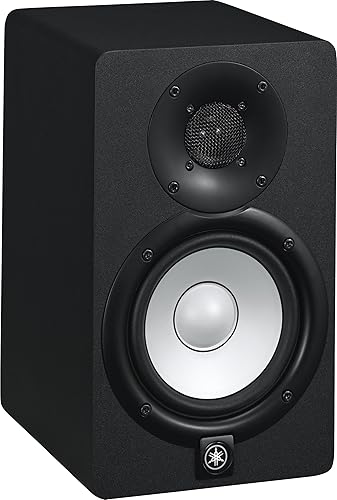
Yamaha HS5 Powered Studio Monitor, Single
Best for: Mixers who want a reference that punishes sloppy EQ and level choices, so mixes translate to other systems.
#4 in our rankings · Best treble detail
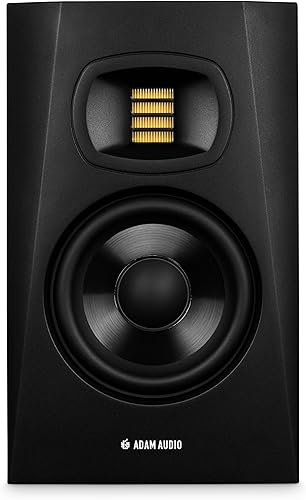
ADAM Audio T5V Studio Monitor, Single
Best for: Producers who mix vocals, acoustic instruments, and airy top end and want tweeter detail a dome cannot quite match.
Our recommendation
Buy the Yamaha HS5 if translation is your priority and you want the most unforgiving midrange check in this tier. Buy the ADAM T5V if treble detail and air matter most, since its ribbon tweeter resolves highs that a dome tweeter softens. Both are five inch singles with limited bass, and the choice is about which end of the spectrum your work lives in.
Midrange honesty against treble detail
The Yamaha midrange is the benchmark here: problems show up immediately, without softening. The ADAM top end is the benchmark here: ribbon detail reveals sibilance, air, and reverb tails with a clarity a dome cannot match. Vocal-heavy work leans ADAM; balance-heavy work leans Yamaha.
Bass extension
The ADAM reaches down to 45 Hz, giving more low-end information than the Yamaha, which rolls off higher. Neither replaces a subwoofer for bass-heavy genres, but the ADAM gives a fuller picture of the low end, while the Yamaha gives a stricter picture of everything above it.
Listening character
The Yamaha can sound clinical and thin on first listen, which is its honesty showing. The ADAM sounds more open and detailed on top, which is enjoyable but can flatter the high end slightly if the listener is not careful. Both reward a period of adjustment before mix decisions are trusted fully.
Choose Yamaha HS5 Powered Studio Monitor, Single if…
- Translation to other systems is your top priority
- You mix balance, levels, and midrange first
- You want the most unforgiving reference
Choose ADAM Audio T5V Studio Monitor, Single if…
- Treble detail and air matter most to your work
- You mix vocals, acoustic instruments, or airy top end
- You want more bass extension from a five inch monitor
Spec-by-spec comparison
| Spec | Yamaha HS5 Powered Studio Monitor, Single | ADAM Audio T5V Studio Monitor, Single |
|---|---|---|
| Price tier | Mid-range | Mid-range |
| Woofer | 5 inch cone | 5 inch polypropylene |
| Tweeter | 1 inch dome | U-ART accelerated ribbon |
| Total power | 70 watts bi-amplified (45 watts LF, 25 watts HF) | 70 watts |
| Frequency response | 54 Hz to 30 kHz | 45 Hz to 25 kHz |
| Inputs | Balanced XLR and 1/4 inch TRS | - |
| Sold as | - | Single monitor |
| Best for | Mixers who want a reference that punishes sloppy EQ and level choices, so mixes translate to other systems. | Producers who mix vocals, acoustic instruments, and airy top end and want tweeter detail a dome cannot quite match. |
| Skip if | You want a monitor that flatters music for casual listening, or you need bass weight for hip-hop and electronic genres. | You need strong low bass from a five inch monitor, or you want front-panel controls instead of rear-panel switches. |
Strengths and limitations
Yamaha HS5 Powered Studio Monitor, Single
Strengths
- The HS Series voicing is deliberately flat and revealing, which makes midrange problems audible instead of hidden.
- Room Control and High Trim switches give two useful, clearly labelled corrections for wall proximity and bright rooms.
- The white cone and simple cabinet make it easy to see driver movement and to spot the monitor in a dark studio at a glance.
Limitations
- Bass rolls off noticeably below the mid-bass, so low end decisions need a subwoofer or a trusted headphone check.
- The honest voicing can sound thin or clinical on first listen, especially to buyers coming from consumer speakers.
- Sold singly, so a pair doubles the headline figure, and the rear port needs breathing room from the wall behind it.
ADAM Audio T5V Studio Monitor, Single
Strengths
- The U-ART accelerated ribbon tweeter resolves high-frequency detail and stereo air with unusual clarity for this tier.
- Bass extension down to 45 Hz is respectable for a five inch monitor, giving more low-end information than many rivals.
- A wide sweet spot from the tweeter design means the top end stays consistent across a normal desk listening position.
Limitations
- Sold singly, and the ribbon tweeter, while detailed, is a different character from a dome, so A/B checks against a dome monitor are wise.
- The rear port needs clearance from the wall, which limits placement in very tight desk setups.
- Low bass still falls short of a six or eight inch monitor, so sub-bass heavy work needs a second reference.
How they fit the wider field
- Yamaha HS5 Powered Studio Monitor, Single: ranked #3 (Best for critical mixing) in The Best Studio Monitors. Read the full Yamaha HS5 Powered Studio Monitor, Single review.
- ADAM Audio T5V Studio Monitor, Single: ranked #4 (Best treble detail) in The Best Studio Monitors.
Neither one quite right? The full rankings cover 10 picks matched to different buyers.
Made your call?
Questions, answered
Which monitor is more fatiguing?
The Yamaha can feel fatiguing because it exposes harshness rather than smoothing it, while the ADAM ribbon can feel detailed without harshness. Fatigue here is usually a sign the mix has a problem, not that the monitor is at fault, though long sessions on either benefit from breaks and moderate levels.
Do both need a subwoofer for bass music?
Yes, for serious sub-bass work, both need a second reference, whether headphones or a subwoofer. The ADAM gets closer on its own, but neither five inch monitor represents the lowest octave with full authority.
Which is better as a second monitor?
The Yamaha is the classic second monitor, since its honesty checks a mix made on a more forgiving main pair. The ADAM works as a main monitor for detail-focused work, and as a second monitor it adds a treble perspective a dome main pair lacks.