Ranked on small-room behaviour: cabinet size, bass control, boundary tuning, and whether the monitor overwhelms a close listening distance.
The Best Studio Monitors for Small Rooms (2026)
Studio monitors for small rooms: compact cabinets, controlled bass, and room settings that keep a tiny space honest.
Our top picks at a glance
Best tiny-room pair
 PreSonus Eris 3.5 2nd Gen Studio Monitors, Pair
Creators on a tiny desk, in a dorm, or in a bedroom corner who still want a tuned monitor pair rather than computer speakers.
Best small-room budget pair
 Edifier MR4 Powered Studio Monitor Speakers, Pair
First-time producers and content creators who need a complete stereo pair on the smallest sensible budget.
Best small-room reference
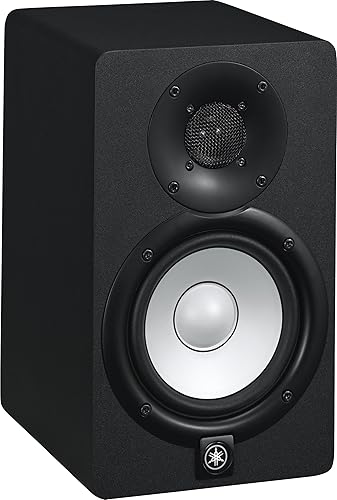 Yamaha HS5 Powered Studio Monitor, Single
Mixers who want a reference that punishes sloppy EQ and level choices, so mixes translate to other systems.
The PreSonus Eris 3.5 pair is the small-room pick for the tiniest desks, and the Edifier MR4 pair is the budget pick for a small bedroom. The Yamaha HS5 is the reference choice, since its restrained bass avoids exciting small-room modes, while the JBL 305P MkII and Mackie MR524 add waveguide imaging and space controls for desks pushed against a wall. Avoid eight inch monitors in a small room entirely.
The picks, ranked
| Pick | Woofer | Tweeter | Total power | Buy |
|---|---|---|---|---|
| Best tiny-room pairPreSonus Eris 3.5 2nd Gen Studio Monitors, Pair | 3.5 inch woven composite | 1 inch silk dome | 50 watts Class AB (25 watts per side) | Check price |
| Best small-room budget pairEdifier MR4 Powered Studio Monitor Speakers, Pair | 4 inch | 1 inch silk dome | 42 watts (21 watts per speaker) | Check price |
| Best small-room referenceYamaha HS5 Powered Studio Monitor, Single | 5 inch cone | 1 inch dome | 70 watts bi-amplified (45 watts LF, 25 watts HF) | Check price |
 Best small-room imagingJBL 305P MkII Powered 5 Inch Studio Monitor, Single | 5 inch | 1 inch soft dome | 82 watts bi-amplified Class D (41 watts LF, 41 watts HF) | Check price |
 Best small-room five inch valueMackie MR524 Powered Studio Monitor, Single | 5 inch polypropylene | 1 inch silk dome | 50 watts bi-amplified Class AB | Check price |
Best tiny-room pair
PreSonus Eris 3.5 2nd Gen Studio Monitors, Pair
The compact desktop pair: tiny 3.5 inch monitors with front controls and tuning knobs for the smallest desks.
Strengths
- The tiny footprint fits desks where a five inch monitor would crowd the keyboard and the interface.
- Front-panel volume, headphone output, and high and low tuning knobs make everyday adjustments easy without reaching behind.
- It arrives as a pair with a woven-composite woofer and silk dome tweeter, so the stereo setup is complete out of the box.
Limitations
- A 3.5 inch woofer rolls off at 80 Hz, so bass below that range is simply not represented, and headphones must cover it.
- Output is limited to a near-field desk distance, and the pair will not fill a room for casual listening at volume.
- The small cabinet cannot move enough air for tracking loud instruments, so it is a mixing and editing tool, not a playback system.
What owners report
Commonly praised
- The tiny footprint fits desks where a five inch monitor would never squeeze in
- Front controls for volume and tuning make everyday adjustments effortless
- As a complete pair it is ready for stereo work straight out of the box
Common complaints
- Bass stops well short of the deep end, so low-end work always needs headphones
- Volume suits near-field desk listening only, and a larger room swallows the sound
- The small drivers cannot keep up with loud tracking or casual room playback
Recurring themes from owner reviews on retailers and forums, summarised by our editors. Updated October 2026.
| Woofer | 3.5 inch woven composite |
|---|---|
| Tweeter | 1 inch silk dome |
| Total power | 50 watts Class AB (25 watts per side) |
| Frequency response | 80 Hz to 20 kHz |
| Sold as | Pair |
Best for: Creators on a tiny desk, in a dorm, or in a bedroom corner who still want a tuned monitor pair rather than computer speakers.
Skip if: You mix seriously and need bass below 80 Hz, or your room is large enough for a five inch monitor.
Best small-room budget pair
Edifier MR4 Powered Studio Monitor Speakers, Pair
The true budget pair: two four inch monitors, front headphone output, and a near-flat tune for a first home studio.
Strengths
- It arrives as a finished pair, so the headline figure is the stereo figure, with no second purchase hiding behind it.
- The front-panel headphone jack and volume knob make late-night checks and level changes quick without reaching behind the desk.
- The four inch woofer and silk dome tweeter are tuned toward flatness rather than bass boom, which suits learning to mix.
Limitations
- A four inch woofer cannot reach deep bass, so low-end work needs headphones as a second reference.
- Inputs are unbalanced TRS, RCA, and AUX only, so a balanced professional setup needs an interface with matching outputs.
- Output is modest, so a larger room or a loud tracking session will push these monitors to their limit.
What owners report
Commonly praised
- A complete pair in one box removes all guesswork for a first studio setup
- The front headphone jack and volume knob make late-night work simple and quick
- Sound stays fairly flat rather than bass-heavy, which helps beginners learn to mix honestly
Common complaints
- Deep bass is missing, so bass-heavy tracks need headphones to judge the low end
- Unbalanced inputs only, which limits use with professional interfaces
- Output runs out of headroom in a larger room or a louder session
Recurring themes from owner reviews on retailers and forums, summarised by our editors. Updated October 2026.
| Woofer | 4 inch |
|---|---|
| Tweeter | 1 inch silk dome |
| Total power | 42 watts (21 watts per speaker) |
| Frequency response | 60 Hz to 20 kHz |
| Sold as | Pair |
Best for: First-time producers and content creators who need a complete stereo pair on the smallest sensible budget.
Skip if: You mix bass-heavy music seriously, or you need balanced XLR inputs for a professional interface.
Best small-room reference
Yamaha HS5 Powered Studio Monitor, Single
The brutally honest five inch: a flat, unforgiving HS Series monitor that exposes mix problems instead of smoothing them over.
Strengths
- The HS Series voicing is deliberately flat and revealing, which makes midrange problems audible instead of hidden.
- Room Control and High Trim switches give two useful, clearly labelled corrections for wall proximity and bright rooms.
- The white cone and simple cabinet make it easy to see driver movement and to spot the monitor in a dark studio at a glance.
Limitations
- Bass rolls off noticeably below the mid-bass, so low end decisions need a subwoofer or a trusted headphone check.
- The honest voicing can sound thin or clinical on first listen, especially to buyers coming from consumer speakers.
- Sold singly, so a pair doubles the headline figure, and the rear port needs breathing room from the wall behind it.
What owners report
Commonly praised
- Mix problems show up plainly, so tracks finished here tend to travel well to other speakers
- The midrange is clear and uncoloured, which suits vocal and guitar work especially well
- Build quality feels solid and studio-ready, with simple controls that do the job
Common complaints
- The sound can feel thin or clinical to listeners coming from consumer speakers
- Bass below the midrange is limited, so low-end work needs another check
- One monitor per box means the pair price is double the headline figure
Recurring themes from owner reviews on retailers and forums, summarised by our editors. Updated October 2026.
| Woofer | 5 inch cone |
|---|---|
| Tweeter | 1 inch dome |
| Total power | 70 watts bi-amplified (45 watts LF, 25 watts HF) |
| Frequency response | 54 Hz to 30 kHz |
| Inputs | Balanced XLR and 1/4 inch TRS |
Best for: Mixers who want a reference that punishes sloppy EQ and level choices, so mixes translate to other systems.
Skip if: You want a monitor that flatters music for casual listening, or you need bass weight for hip-hop and electronic genres.
Best small-room imaging
JBL 305P MkII Powered 5 Inch Studio Monitor, Single
The wide sweet spot pick: JBL waveguide imaging and dual Class D amps in a compact five inch cabinet.
Strengths
- The Image Control Waveguide gives a broad, stable stereo image, so small head movements do not collapse the mix picture.
- Dual 41 watt Class D amplifiers keep woofer and tweeter on separate power, which helps transient clarity at higher levels.
- Boundary EQ and HF trim switches let the monitor be tuned for desk, wall, and corner placement without extra gear.
Limitations
- Sold singly, so check the listing carefully: the pair listing is a different ASIN and the single listing is the one used here.
- Bass extension is honest for a five inch driver but limited, and sub-bass decisions still need headphones or a subwoofer.
- The rear panel controls are small and recessed, so tuning is a set-and-forget job rather than something adjusted mid-session.
What owners report
Commonly praised
- The stereo image stays wide and stable even when listening slightly off centre
- Vocals and instruments sit clearly apart in a busy mix, which makes panning decisions easier
- The compact size fits a normal desk without crowding the keyboard or interface
Common complaints
- The single listing catches out buyers who expected a pair in the box
- Bass depth is limited, so low-end checks need a second reference
- The glossy front panel shows reflections in a brightly lit room
Recurring themes from owner reviews on retailers and forums, summarised by our editors. Updated October 2026.
| Woofer | 5 inch |
|---|---|
| Tweeter | 1 inch soft dome |
| Total power | 82 watts bi-amplified Class D (41 watts LF, 41 watts HF) |
| Frequency range | 43 Hz to 24 kHz |
| Inputs | Balanced XLR and 1/4 inch TRS |
Best for: Producers who move around the desk and need a monitor that stays coherent off axis, not only dead centre.
Skip if: You want the deepest bass from a five inch monitor, or you dislike a glossy front baffle in a bright room.
Best small-room five inch value
Mackie MR524 Powered Studio Monitor, Single
The workhorse five inch: a logarithmic waveguide, Class AB amps, and acoustic space controls at a budget-friendly single price.
Strengths
- The logarithmic waveguide widens the sweet spot, so the stereo image holds up when you lean in to adjust a plugin.
- Class AB amplification gives a smooth, unforced character that suits long sessions without listener fatigue.
- Acoustic space controls for wall and corner placement are genuinely useful, not decorative, in a bedroom studio.
Limitations
- Sold singly, so the pair total is double the single figure, which closes the gap with pair-priced rivals.
- Bass extension is limited for a five inch monitor, and the rear port needs clearance that a desk against a wall may not give.
- The cabinet design is functional rather than refined, and the front logo light divides opinion in a dark room.
What owners report
Commonly praised
- The wide sweet spot makes it easy to hear stereo placement without sitting perfectly still
- Sound stays smooth over long sessions, without the fatigue some brighter monitors cause
- Space controls genuinely help when the monitor must sit near a wall or in a corner
Common complaints
- One box holds one monitor, so stereo needs a second purchase that new buyers sometimes miss
- Bass depth is modest, and sub-bass decisions need another reference
- The front logo light is a distraction for some users in a dark room
Recurring themes from owner reviews on retailers and forums, summarised by our editors. Updated October 2026.
| Woofer | 5 inch polypropylene |
|---|---|
| Tweeter | 1 inch silk dome |
| Total power | 50 watts bi-amplified Class AB |
| Frequency response | 45 Hz to 20 kHz |
| Inputs | Balanced XLR and TRS, unbalanced RCA |
Best for: Producers who want a proper five inch monitor on a tight budget and already own an interface with balanced outputs.
Skip if: You want a finished pair in one box, or you need bass below the mid-bass without a second reference.
Questions, answered
Why do larger monitors sound worse in a small room?
Because bass wavelengths are long, and a small room reinforces some frequencies and cancels others. An eight inch monitor produces more bass energy for the room to distort, so the mix picture gets less accurate, not more. A smaller monitor with less bass output is easier for a small room to handle honestly.
How close should I sit to studio monitors in a small room?
At a near-field distance, typically with the two monitors and your head forming an equilateral triangle, and tweeters at ear height. In a small room that triangle is often shorter than the textbook distance, which is another reason compact monitors suit the space better than large ones.
Does a subwoofer help in a small room?
Usually it makes the problem worse before it helps. A subwoofer adds bass energy that a small untreated room cannot control, and placement becomes critical. Fix placement and basic treatment first, and add a subwoofer only when the main monitors genuinely cannot represent the low end you work with.