Ranked on home-studio practicality: room controls, port placement, desk footprint, and how the monitor behaves in an untreated room.
The Best Studio Monitors for a Home Studio (2026)
Studio monitors for a real home studio: five and six inch monitors with room tuning for untreated bedrooms and spare rooms.
Our top picks at a glance
Best home studio overall
 KRK Rokit 5 Generation Five Powered Studio Monitor, Single
Home producers who want a current, widely supported five inch monitor for mixing in a small to medium room.
Best home studio six inch
 Kali Audio LP-6 V2 Powered Studio Monitor, Single
Producers in a medium room who want deeper bass and a wider image than a five inch monitor without jumping to eight inches.
Best home studio imaging
 JBL 305P MkII Powered 5 Inch Studio Monitor, Single
Producers who move around the desk and need a monitor that stays coherent off axis, not only dead centre.
The KRK Rokit 5 G5 is the home-studio pick, because its room presets directly address the placement compromises of a bedroom. The Kali LP-6 V2 is the step up for a medium room, the JBL 305P MkII wins when the listening triangle is imperfect, and the Yamaha HS5 is the reference to add when translation matters more than listening pleasure.
The picks, ranked
| Pick | Woofer | Tweeter | Total power | Buy |
|---|---|---|---|---|
| Best home studio overallKRK Rokit 5 Generation Five Powered Studio Monitor, Single | 5 inch woven Kevlar aramid fiber | 1 inch silk dome | 55 watts bi-amplified Class D (35 watts LF, 20 watts HF) | Check price |
| Best home studio six inchKali Audio LP-6 V2 Powered Studio Monitor, Single | 6.5 inch | 1 inch textile dome | 80 watts (40 watts LF, 40 watts HF) | Check price |
| Best home studio imagingJBL 305P MkII Powered 5 Inch Studio Monitor, Single | 5 inch | 1 inch soft dome | 82 watts bi-amplified Class D (41 watts LF, 41 watts HF) | Check price |
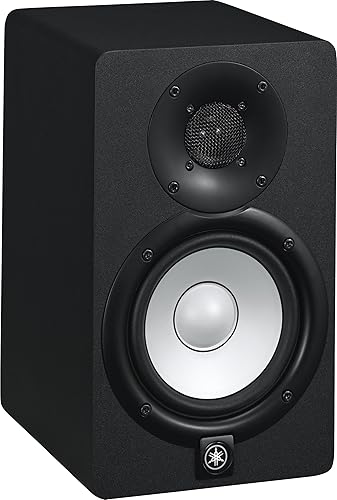 Best home studio referenceYamaha HS5 Powered Studio Monitor, Single | 5 inch cone | 1 inch dome | 70 watts bi-amplified (45 watts LF, 25 watts HF) | Check price |
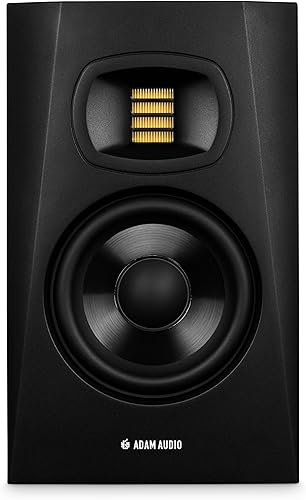 Best home studio trebleADAM Audio T5V Studio Monitor, Single | 5 inch polypropylene | U-ART accelerated ribbon | 70 watts | Check price |
Best home studio overall
KRK Rokit 5 Generation Five Powered Studio Monitor, Single
The modern bedroom-studio standard: a fifth-generation five inch monitor with a Kevlar woofer and a reworked silk dome tweeter.
Strengths
- The woven Kevlar woofer stays controlled in the low mids, which is where crowded mixes usually turn muddy first.
- The redesigned silk dome tweeter extends cleanly upward, so sibilance and hi-hat detail are easier to judge without harshness.
- Twenty-five boundary and EQ presets on the rear give real help in an untreated room, where placement is rarely ideal.
Limitations
- Sold singly, so a stereo pair needs two purchases, and the total outlay is higher than a pair-priced listing suggests.
- A five inch woofer cannot reproduce the lowest octave with authority, so bass-heavy producers will still want a subwoofer check.
- The front port and compact cabinet reward careful placement, and a monitor pushed hard against a wall needs its boundary settings used properly.
What owners report
Commonly praised
- The low mids stay tidy even when a mix gets crowded, which helps home producers hear mud early
- The yellow woofer and compact cabinet look right at home on a bedroom desk setup
- Room presets make a real difference when the monitor has to sit close to a wall
Common complaints
- Buying two singles adds up, and first-time buyers sometimes order one by mistake
- Deep sub-bass still needs headphones or a subwoofer to judge properly
- The rear controls are fiddly to reach once the monitor is placed on a desk
Recurring themes from owner reviews on retailers and forums, summarised by our editors. Updated October 2026.
| Woofer | 5 inch woven Kevlar aramid fiber |
|---|---|
| Tweeter | 1 inch silk dome |
| Total power | 55 watts bi-amplified Class D (35 watts LF, 20 watts HF) |
| Frequency response | 54 Hz to 30 kHz, plus or minus 3 dB |
| Sold as | Single monitor |
Best for: Home producers who want a current, widely supported five inch monitor for mixing in a small to medium room.
Skip if: You need deep bass without a subwoofer, or you want a monitor that arrives as a finished pair in one box.
Best home studio six inch
Kali Audio LP-6 V2 Powered Studio Monitor, Single
The measurement-led six inch: a 3-D imaging waveguide, boundary EQ, and low noise floor in a larger, deeper cabinet.
Strengths
- The 3-D imaging waveguide produces a wide, precise stereo picture that holds up across a normal listening triangle.
- Boundary EQ settings for wall, corner, and free-space placement make it unusually forgiving in real, untreated rooms.
- The low-noise amplifier design keeps hiss low at idle, which matters in a quiet room at close listening distance.
Limitations
- At over 14 inches tall and 15 pounds, it is a substantial desk object that needs proper stands or a deep desk.
- Sold singly, so the pair cost is double the single figure, which pushes it above some five inch pairs in total.
- The front port and large woofer still benefit from room treatment; EQ presets help, but they cannot fix a bad room entirely.
What owners report
Commonly praised
- The stereo picture feels spacious and precise, with instruments placed convincingly across the soundstage
- Hiss at idle is barely noticeable, which matters in a quiet room at close range
- Boundary settings help a lot in rooms where ideal placement is simply not possible
Common complaints
- The cabinet is tall and heavy, so a small desk or flimsy stand struggles with it
- A single purchase does not make a stereo pair, and the doubled cost surprises some buyers
- The size dominates a compact setup, leaving little room for other desk gear
Recurring themes from owner reviews on retailers and forums, summarised by our editors. Updated October 2026.
| Woofer | 6.5 inch |
|---|---|
| Tweeter | 1 inch textile dome |
| Total power | 80 watts (40 watts LF, 40 watts HF) |
| Frequency response | 47 Hz to 21 kHz, plus or minus 3 dB |
| Inputs | Balanced XLR and TRS, unbalanced RCA |
Best for: Producers in a medium room who want deeper bass and a wider image than a five inch monitor without jumping to eight inches.
Skip if: Your desk is small, since this is a tall, deep cabinet, or you need a finished pair in one box.
Best home studio imaging
JBL 305P MkII Powered 5 Inch Studio Monitor, Single
The wide sweet spot pick: JBL waveguide imaging and dual Class D amps in a compact five inch cabinet.
Strengths
- The Image Control Waveguide gives a broad, stable stereo image, so small head movements do not collapse the mix picture.
- Dual 41 watt Class D amplifiers keep woofer and tweeter on separate power, which helps transient clarity at higher levels.
- Boundary EQ and HF trim switches let the monitor be tuned for desk, wall, and corner placement without extra gear.
Limitations
- Sold singly, so check the listing carefully: the pair listing is a different ASIN and the single listing is the one used here.
- Bass extension is honest for a five inch driver but limited, and sub-bass decisions still need headphones or a subwoofer.
- The rear panel controls are small and recessed, so tuning is a set-and-forget job rather than something adjusted mid-session.
What owners report
Commonly praised
- The stereo image stays wide and stable even when listening slightly off centre
- Vocals and instruments sit clearly apart in a busy mix, which makes panning decisions easier
- The compact size fits a normal desk without crowding the keyboard or interface
Common complaints
- The single listing catches out buyers who expected a pair in the box
- Bass depth is limited, so low-end checks need a second reference
- The glossy front panel shows reflections in a brightly lit room
Recurring themes from owner reviews on retailers and forums, summarised by our editors. Updated October 2026.
| Woofer | 5 inch |
|---|---|
| Tweeter | 1 inch soft dome |
| Total power | 82 watts bi-amplified Class D (41 watts LF, 41 watts HF) |
| Frequency range | 43 Hz to 24 kHz |
| Inputs | Balanced XLR and 1/4 inch TRS |
Best for: Producers who move around the desk and need a monitor that stays coherent off axis, not only dead centre.
Skip if: You want the deepest bass from a five inch monitor, or you dislike a glossy front baffle in a bright room.
Best home studio reference
Yamaha HS5 Powered Studio Monitor, Single
The brutally honest five inch: a flat, unforgiving HS Series monitor that exposes mix problems instead of smoothing them over.
Strengths
- The HS Series voicing is deliberately flat and revealing, which makes midrange problems audible instead of hidden.
- Room Control and High Trim switches give two useful, clearly labelled corrections for wall proximity and bright rooms.
- The white cone and simple cabinet make it easy to see driver movement and to spot the monitor in a dark studio at a glance.
Limitations
- Bass rolls off noticeably below the mid-bass, so low end decisions need a subwoofer or a trusted headphone check.
- The honest voicing can sound thin or clinical on first listen, especially to buyers coming from consumer speakers.
- Sold singly, so a pair doubles the headline figure, and the rear port needs breathing room from the wall behind it.
What owners report
Commonly praised
- Mix problems show up plainly, so tracks finished here tend to travel well to other speakers
- The midrange is clear and uncoloured, which suits vocal and guitar work especially well
- Build quality feels solid and studio-ready, with simple controls that do the job
Common complaints
- The sound can feel thin or clinical to listeners coming from consumer speakers
- Bass below the midrange is limited, so low-end work needs another check
- One monitor per box means the pair price is double the headline figure
Recurring themes from owner reviews on retailers and forums, summarised by our editors. Updated October 2026.
| Woofer | 5 inch cone |
|---|---|
| Tweeter | 1 inch dome |
| Total power | 70 watts bi-amplified (45 watts LF, 25 watts HF) |
| Frequency response | 54 Hz to 30 kHz |
| Inputs | Balanced XLR and 1/4 inch TRS |
Best for: Mixers who want a reference that punishes sloppy EQ and level choices, so mixes translate to other systems.
Skip if: You want a monitor that flatters music for casual listening, or you need bass weight for hip-hop and electronic genres.
Best home studio treble
ADAM Audio T5V Studio Monitor, Single
The ribbon-tweeter upgrade: ADAM U-ART highs and a five inch polypropylene woofer in a compact, rear-ported cabinet.
Strengths
- The U-ART accelerated ribbon tweeter resolves high-frequency detail and stereo air with unusual clarity for this tier.
- Bass extension down to 45 Hz is respectable for a five inch monitor, giving more low-end information than many rivals.
- A wide sweet spot from the tweeter design means the top end stays consistent across a normal desk listening position.
Limitations
- Sold singly, and the ribbon tweeter, while detailed, is a different character from a dome, so A/B checks against a dome monitor are wise.
- The rear port needs clearance from the wall, which limits placement in very tight desk setups.
- Low bass still falls short of a six or eight inch monitor, so sub-bass heavy work needs a second reference.
What owners report
Commonly praised
- High-frequency detail feels open and airy, with reverb tails and sibilance easy to pick apart
- The ribbon tweeter gives a wide sweet spot that suits a normal desk triangle
- Bass reach is generous for a five inch monitor, covering more of the low end than expected
Common complaints
- The ribbon character takes some getting used to beside a familiar dome tweeter
- Rear-port placement needs care, since a wall right behind the cabinet muddies the bass
- Sub-bass heavy genres still need a subwoofer or headphone check
Recurring themes from owner reviews on retailers and forums, summarised by our editors. Updated October 2026.
| Woofer | 5 inch polypropylene |
|---|---|
| Tweeter | U-ART accelerated ribbon |
| Total power | 70 watts |
| Frequency response | 45 Hz to 25 kHz |
| Sold as | Single monitor |
Best for: Producers who mix vocals, acoustic instruments, and airy top end and want tweeter detail a dome cannot quite match.
Skip if: You need strong low bass from a five inch monitor, or you want front-panel controls instead of rear-panel switches.
Questions, answered
How far from the wall should studio monitors sit?
As far as the room allows, and never hard against it without using the boundary controls. Rear-ported monitors need breathing room behind the cabinet, and a monitor pushed into a corner will exaggerate bass. Use the boundary or room control switch for the actual placement, not the ideal one.
Do I need acoustic treatment before buying monitors?
No, but treatment changes what the monitors can tell you. Start with monitors that have room controls, place them in an equilateral triangle with your head, and add basic treatment, starting with the first reflection points, as the next upgrade rather than delaying the monitor purchase for a perfect room.
Should home studio monitors sit on the desk or on stands?
Stands are better when space allows, since they decouple the cabinet from the desk and let you set tweeter height at ear level. On a desk, use isolation pads and angle the monitors so the tweeters point at your ears, not at your chest or over your head.