Best of
The Best Internal SSDs (2026)
The best internal SSDs of 2026: Samsung 990 PRO, WD Black SN850X, SK hynix Platinum P41, Samsung 980 PRO, Kingston NV3, and more, compared on speed, endurance, and value.
Our top picks at a glance
Best overall
 Samsung 990 PRO SSD 1TB PCIe 4.0 NVMe M.2
Gamers, creators, and power users who want the fastest Gen4 drive without stepping into Gen5 cost and heat.
Best for gaming
 WD_BLACK SN850X NVMe SSD 1TB Gen4 PCIe M.2 2280
PC gamers who want fast loads, low latency, and game-focused drive features in a proven flagship.
Best efficient flagship
 SK hynix Platinum P41 1TB PCIe NVMe Gen4 M.2 2280 SSD
Laptop upgraders and small-form-factor builders who want flagship speed without flagship heat.
For most buyers with an M.2 slot, the Samsung 990 PRO is the pick: the fastest Gen4 drive here with software that makes upgrading easy. Gamers should also consider the WD Black SN850X, value buyers should buy the Kingston NV3, and anyone on the smallest budget should buy the Kingston NV2. Machines without an M.2 slot should buy the Samsung 870 EVO instead, since SATA is the only route there.
The picks, ranked
Best overall
Samsung 990 PRO SSD 1TB PCIe 4.0 NVMe M.2
The flagship to beat: top Gen4 speeds, strong efficiency, and Samsung software that makes cloning and monitoring painless.
Strengths
- Sequential speeds up to 7,450 MB/s read and 6,900 MB/s write sit at the top of Gen4, so large games and video files move quickly.
- Power efficiency is strong for a flagship, which helps laptops and small builds stay cooler under sustained loads.
- Samsung Magician software covers cloning, firmware updates, and health monitoring in one place, which simplifies the upgrade itself.
Limitations
- It needs a PCIe 4.0 slot to reach full speed, and on a Gen3 machine it runs at Gen3 speeds like any Gen4 drive.
- The premium position means value buyers pay notably more than for a Kingston NV3 or Crucial P3 Plus that already feels fast.
- It ships without a heatsink on this listing, so console or tight-build buyers should check cooling before ordering.
What owners report
Commonly praised
- Large games and video files move noticeably quickly
- The drive stays efficient and cool for a flagship in small builds
- Cloning an old drive feels straightforward with the bundled software
Common complaints
- Full speed stays out of reach on older Gen3 slots
- The premium cost is hard to justify for light everyday use
- Console buyers miss having a heatsink included in the box
Recurring themes from owner reviews on retailers and forums, summarised by our editors. Updated October 2026.
| Capacity | 1TB |
|---|---|
| Interface | PCIe 4.0 x4 NVMe, M.2 2280 |
| Sequential read | Up to 7,450 MB/s |
| Sequential write | Up to 6,900 MB/s |
| Endurance | 600 TBW, 5-year warranty |
Best for: Gamers, creators, and power users who want the fastest Gen4 drive without stepping into Gen5 cost and heat.
Skip if: Your machine has no M.2 NVMe slot, or your budget points to a value drive that already transforms daily use.
Best for gaming
WD_BLACK SN850X NVMe SSD 1TB Gen4 PCIe M.2 2280
The gaming drive: game-mode features, top Gen4 speeds, and a dashboard that keeps game libraries loading fast.
Strengths
- Speeds up to 7,300 MB/s read and 6,300 MB/s write keep game loads short and large installs quick to move.
- Game Mode features in the WD dashboard aim to reduce latency and keep the drive ready for gaming sessions.
- A long track record across gaming builds means compatibility and firmware maturity are well proven by now.
Limitations
- This listing has no heatsink, so console buyers and tight laptop installs should check the heatsink version instead.
- Flagship pricing sits well above value Gen4 drives that already load games quickly for most players.
- Full speed needs a Gen4 slot, and Gen3 machines will cap it like any other Gen4 drive.
What owners report
Commonly praised
- Game loads feel short and worlds stream smoothly
- The dashboard game features suit a dedicated gaming rig
- Years of gaming use give owners confidence in its maturity
Common complaints
- The bare drive needs a separate heatsink for console use
- Flagship pricing sits well above value drives that already load games fast
- Gen3 machines cap its speed just like any Gen4 drive
Recurring themes from owner reviews on retailers and forums, summarised by our editors. Updated October 2026.
| Capacity | 1TB |
|---|---|
| Interface | PCIe 4.0 x4 NVMe, M.2 2280 |
| Sequential read | Up to 7,300 MB/s |
| Sequential write | Up to 6,300 MB/s |
| Endurance | 600 TBW, 5-year warranty |
Best for: PC gamers who want fast loads, low latency, and game-focused drive features in a proven flagship.
Skip if: You need a heatsink in the box for a console, or your machine only has a SATA bay.
Best efficient flagship
SK hynix Platinum P41 1TB PCIe NVMe Gen4 M.2 2280 SSD
The efficient flagship: near-top speeds with notably low power draw, for laptops and small builds that run warm.
Strengths
- Speeds up to 7,000 MB/s read and 6,500 MB/s write sit close to the fastest Gen4 drives in everyday use.
- Low power draw and efficient 176-layer NAND help laptops run cooler and stretch battery life compared with hotter flagships.
- The single-sided design fits thin laptops where double-sided drives can struggle for clearance.
Limitations
- SK hynix software and support are less familiar to many buyers than Samsung Magician or the WD dashboard.
- Sustained write performance can fall back under very long, heavy writes, as with many efficient flagship designs.
- Availability and pricing swing more than Samsung and WD flagships, so the value case depends on the day.
What owners report
Commonly praised
- Laptop sessions stay cooler than with hotter flagship drives
- The slim single-sided board fits thin laptops neatly
- Everyday speed feels close to the fastest drives on the market
Common complaints
- Support software feels less familiar than Samsung or WD tools
- Very long heavy writes can see speeds fall back
- Stock and pricing vary more than with bigger-name flagships
Recurring themes from owner reviews on retailers and forums, summarised by our editors. Updated October 2026.
| Capacity | 1TB |
|---|---|
| Interface | PCIe 4.0 x4 NVMe, M.2 2280 |
| Sequential read | Up to 7,000 MB/s |
| Sequential write | Up to 6,500 MB/s |
| Endurance | 750 TBW, 5-year warranty |
Best for: Laptop upgraders and small-form-factor builders who want flagship speed without flagship heat.
Skip if: You want the most widely supported cloning software, or your workload is sustained writes for hours at a time.
Best proven flagship
Samsung 980 PRO SSD 1TB PCIe 4.0 NVMe Gen4 M.2
The proven flagship: a generation older than the 990 PRO, still fast, and often the better value Samsung.

Strengths
- Speeds up to 7,000 MB/s read and 5,000 MB/s write remain fast for gaming, editing, and heavy multitasking.
- Samsung Magician software makes cloning an old drive and checking drive health straightforward.
- Years of firmware maturity and wide compatibility make it a low-risk upgrade for desktops and laptops alike.
Limitations
- Write speeds trail the 990 PRO noticeably, which shows on very large file copies.
- It runs hotter than the 990 PRO under sustained load, so cooling matters in tight builds.
- It still needs a Gen4 slot for full speed, and Gen3 machines cap it like any Gen4 drive.
What owners report
Commonly praised
- A long-proven drive that owners trust for desktops and laptops alike
- Cloning and health checks through the software feel reassuring
- Speed remains ample for gaming and editing work
Common complaints
- Write pace lags behind the newer 990 PRO on huge copies
- Sustained loads run warmer than on the newer flagship
- Gen3 slots hold it back from its full potential
Recurring themes from owner reviews on retailers and forums, summarised by our editors. Updated October 2026.
| Capacity | 1TB |
|---|---|
| Interface | PCIe 4.0 x4 NVMe, M.2 2280 |
| Sequential read | Up to 7,000 MB/s |
| Sequential write | Up to 5,000 MB/s |
| Endurance | 600 TBW, 5-year warranty |
Best for: Buyers who want Samsung reliability and software at a lower position than the 990 PRO.
Skip if: You need the very fastest Gen4 speeds, or your machine has no M.2 NVMe slot.
Best value Gen4
Kingston NV3 1TB M.2 2280 NVMe SSD PCIe 4.0 Gen4
The value Gen4 sweet spot: 6,000 MB/s reads at a price that makes flagship money hard to justify for most users.

Strengths
- Reads up to 6,000 MB/s give a genuine Gen4 feel in booting, loading, and file work for far less than flagship money.
- The compact single-sided M.2 design fits laptops, handhelds with a 2280 slot, and small desktops alike.
- Kingston availability is wide, so it is easy to find and easy to recommend without hunting for stock.
Limitations
- It lacks a DRAM cache, so very long sustained writes can slow once the drive fills or the write goes on for a long time.
- Endurance and warranty terms sit below flagship drives, which matters for heavy professional write workloads.
- Write speeds trail the flagship class, so large video exports take longer than on a 990 PRO or SN850X.
What owners report
Commonly praised
- Gen4 speed at a price that feels like a bargain
- Booting and loading feel instant compared with an old hard drive
- The slim board slots into laptops and small desktops easily
Common complaints
- Long sustained writes slow once the drive gets busy or nearly full
- Warranty and endurance terms sit below flagship rivals
- Large video exports take longer than on dearer drives
Recurring themes from owner reviews on retailers and forums, summarised by our editors. Updated October 2026.
| Capacity | 1TB |
|---|---|
| Interface | PCIe 4.0 x4 NVMe, M.2 2280 |
| Sequential read | Up to 6,000 MB/s |
| Sequential write | Up to 4,000 MB/s |
| Cache | DRAM-less, host memory buffer |
Best for: Everyday upgraders and gamers who want real Gen4 speed without flagship pricing.
Skip if: You write huge files constantly, where a DRAM-equipped flagship holds speed longer.
Best for creators on a budget
Western Digital WD Blue SN580 NVMe SSD 1TB Gen4 M.2 2280
The creator's value drive: solid Gen4 speed, good endurance, and a calm price for photo and video libraries.

Strengths
- Reads up to 4,150 MB/s are a large step over SATA and over older Gen3 drives, for a modest outlay.
- Endurance of 600 TBW at 1TB is strong for a value drive, which suits project libraries that get rewritten often.
- The slim single-sided design and 5-year warranty make it an easy, low-risk laptop upgrade.
Limitations
- It is DRAM-less, so heavy sustained writes and nearly-full-drive use can slow it compared with DRAM drives.
- Speeds sit well below flagship Gen4, so buyers chasing the fastest loads should look at the 990 PRO or SN850X.
- Write speeds match reads at this level rather than exceeding them, which shows on very large copies.
What owners report
Commonly praised
- Project libraries load quickly for a modest outlay
- Endurance feels reassuring for a value drive that gets rewritten often
- The slim design and long warranty make laptop fitting worry-free
Common complaints
- No DRAM cache shows under heavy sustained writing
- Speeds trail flagship drives by a clear margin
- Nearly-full use can make performance dip noticeably
Recurring themes from owner reviews on retailers and forums, summarised by our editors. Updated October 2026.
| Capacity | 1TB |
|---|---|
| Interface | PCIe 4.0 x4 NVMe, M.2 2280 |
| Sequential read | Up to 4,150 MB/s |
| Cache | DRAM-less, host memory buffer |
| Endurance | 600 TBW, 5-year warranty |
Best for: Creators and general users who want reliable Gen4 storage for projects without flagship cost.
Skip if: You need top-tier sustained write speed for long video exports, or a DRAM cache for heavy multitasking.
Best budget Gen4
Crucial P3 Plus PCIe Gen4 NVMe SSD 1TB
The cheap Gen4 upgrade: 5,000 MB/s reads for little money, and a drive that makes any hard-drive machine feel new.

Strengths
- Reads up to 5,000 MB/s give a real Gen4 improvement over SATA for booting, apps, and games at a low cost.
- Capacity up to 4TB in the range means the same drive family can grow with a library, though this listing is 1TB.
- Crucial's cloning and support tools are approachable for first-time upgraders.
Limitations
- QLC NAND and no DRAM cache mean sustained writes slow more than on TLC DRAM drives when the drive is busy or nearly full.
- Endurance of 220 TBW at 1TB is the lowest here, so heavy professional writers should choose a higher-endurance drive.
- Write speeds trail reads by a wider margin than on flagship drives, which shows on large copies.
What owners report
Commonly praised
- A cheap jump from hard drive or SATA to real Gen4 pace
- Boot times and app launches feel transformed overnight
- First-time upgraders find the tools approachable and clear
Common complaints
- Sustained writes fade sooner than on TLC drives with DRAM
- Endurance rating is the lowest in this set
- Large copies expose the gap between read and write pace
Recurring themes from owner reviews on retailers and forums, summarised by our editors. Updated October 2026.
| Capacity | 1TB |
|---|---|
| Interface | PCIe 4.0 x4 NVMe, M.2 2280 |
| Sequential read | Up to 5,000 MB/s |
| Sequential write | Up to 4,200 MB/s |
| Endurance | 220 TBW, 5-year warranty |
Best for: Budget upgraders moving from a hard drive or SATA SSD who want a clear speed jump.
Skip if: You write very large files daily, where QLC NAND and no DRAM show their limits.
Best cheapest upgrade
Kingston NV2 1TB M.2 2280 NVMe SSD PCIe 4.0 Gen4
The cheapest way into NVMe: modest Gen4 speeds that still leave hard drives and SATA far behind.

Strengths
- The lowest outlay here buys a genuine NVMe upgrade, with reads up to 3,500 MB/s that transform boot and load times.
- The compact M.2 2280 design fits most modern laptops and desktops with a spare NVMe slot.
- For everyday use, web, office, and light gaming, it feels nearly as quick as dearer drives despite the lower headline speed.
Limitations
- Write speeds up to 2,100 MB/s trail the rest of this list, so large file copies take noticeably longer.
- It is DRAM-less, so sustained writes and nearly-full use can slow it further.
- Endurance and warranty terms are modest, which suits everyday use rather than heavy professional workloads.
What owners report
Commonly praised
- The cheapest NVMe upgrade still transforms a sluggish machine
- Everyday browsing and office work feel nearly as quick as dearer drives
- Fitting takes minutes in most modern laptops and desktops
Common complaints
- Large file copies take noticeably longer than on faster drives
- Heavy sustained writes slow it further without DRAM
- Warranty terms feel modest for a drive meant to last years
Recurring themes from owner reviews on retailers and forums, summarised by our editors. Updated October 2026.
| Capacity | 1TB |
|---|---|
| Interface | PCIe 4.0 x4 NVMe, M.2 2280 |
| Sequential read | Up to 3,500 MB/s |
| Sequential write | Up to 2,100 MB/s |
| Cache | DRAM-less, host memory buffer |
Best for: Anyone upgrading a hard-drive laptop or desktop on the smallest possible budget.
Skip if: You need high sustained write speed, or you plan to fill the drive close to full and keep writing heavily.
Best SATA upgrade
Samsung 870 EVO SATA III SSD 1TB 2.5 Inch
The SATA benchmark: the fastest a SATA bay can go, with Samsung reliability for machines without an M.2 slot.

Strengths
- Speeds up to 560 MB/s read and 530 MB/s write reach the practical limit of SATA, so no SATA drive here is meaningfully faster.
- Samsung Magician software and a long reliability record make it the low-risk SATA choice.
- The 2.5 inch form factor fits a huge range of older laptops and desktops, including machines NVMe cannot help.
Limitations
- SATA speeds are a fraction of NVMe speeds, so buyers with an M.2 slot should not buy SATA by habit.
- It needs a SATA cable and bay in a desktop, or a 2.5 inch slot in a laptop, which newer thin laptops may lack.
- Capacity per money lags behind value NVMe drives, since SATA is now a mature, slower technology.
What owners report
Commonly praised
- Older machines feel new again after the swap
- Samsung software makes cloning and monitoring simple
- Reliability over years gives owners real peace of mind
Common complaints
- Speed cannot match any NVMe drive in a machine with an M.2 slot
- A SATA cable and bay are needed in desktops
- Capacity value lags behind cheap NVMe alternatives
Recurring themes from owner reviews on retailers and forums, summarised by our editors. Updated October 2026.
| Capacity | 1TB |
|---|---|
| Interface | SATA III 6 Gb/s, 2.5 inch |
| Sequential read | Up to 560 MB/s |
| Sequential write | Up to 530 MB/s |
| Endurance | 600 TBW, 5-year warranty |
Best for: Older laptops and desktops with a 2.5 inch bay and no spare M.2 slot, or as a second drive for a game library.
Skip if: Your machine has a free M.2 NVMe slot, where any NVMe here is several times faster for similar money.
Best small SATA upgrade
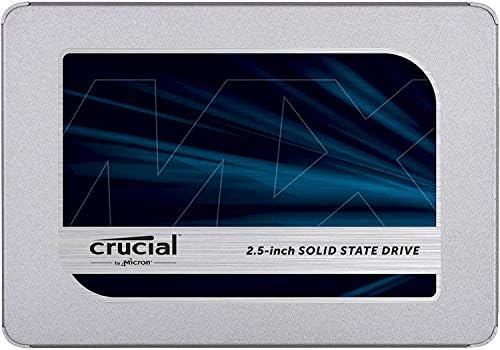
Crucial MX500 500GB 3D NAND SATA 2.5 Inch Internal SSD
The small SATA upgrade: 500GB of fast, reliable storage for a boot drive or a laptop that only needs a little more room.
Strengths
- Reads up to 560 MB/s match the SATA limit, so boot times and app launches improve as much as SATA allows.
- A DRAM cache, unusual at this level, keeps everyday performance steady when the drive fills up.
- The 500GB size suits a boot drive plus core apps, at a lower outlay than any 1TB drive here.
Limitations
- 500GB fills quickly with modern games, so game-library buyers should choose a 1TB drive instead.
- SATA speeds cannot match even the cheapest NVMe here, so M.2 owners should not choose it.
- Endurance of 180 TBW at 500GB suits everyday use rather than heavy write workloads.
What owners report
Commonly praised
- Boot times improve as much as SATA allows
- The DRAM cache keeps pace steady as the drive fills
- The small size makes a cheap boot-drive refresh easy to justify
Common complaints
- Games fill the space quickly and force careful management
- M.2 owners gain far more speed from any NVMe drive
- Endurance suits everyday use rather than heavy writing
Recurring themes from owner reviews on retailers and forums, summarised by our editors. Updated October 2026.
| Capacity | 500GB |
|---|---|
| Interface | SATA III 6 Gb/s, 2.5 inch |
| Sequential read | Up to 560 MB/s |
| Sequential write | Up to 510 MB/s |
| Endurance | 180 TBW, 5-year warranty |
Best for: Older machines that need a boot drive refresh, or a second SATA bay filled cheaply.
Skip if: You need 1TB or more, or your machine has an M.2 slot where NVMe is far faster.
How we chose
Interface first, speed second
A drive that does not fit is useless, however fast it claims to be. We sorted SATA and NVMe honestly, and only compared speeds within the same interface, so a SATA drive is never presented as competing with NVMe.
Speed where it matters
Headline sequential speeds matter for large files, but everyday feel comes from random performance and sustained behaviour. We credited DRAM caches and strong sustained write behaviour, and noted where DRAM-less and QLC designs slow down.
Endurance for the capacity
We recorded TBW for the exact capacity listed, since endurance scales with size. A 500GB drive is not judged against 1TB endurance figures, and heavy writers are steered to higher-endurance drives.
Honest value
A flagship that feels barely faster in daily use than a value drive is not automatically the best buy. We weighted the price step against the felt difference, which is why value Gen4 drives rank highly here.
Questions, answered
NVMe or SATA: which does my computer need?
Check for an M.2 slot that supports NVMe. If your machine has one free, buy NVMe, since it is several times faster than SATA for similar money. If it only has a 2.5 inch bay, buy SATA, and the 870 EVO or MX500 are the right choices.
Does Gen4 speed matter for everyday use?
Less than the jump from a hard drive to any SSD, which is the transformation that matters most. Beyond that, Gen4 speeds help most with large games, video files, and heavy multitasking, while web and office use feels similar across modern SSDs.
How much SSD capacity do I need?
500GB suits a boot drive with core apps, 1TB suits most users with a game or photo library, and 2TB suits large game libraries and video work. Buy 1TB if unsure, since modern games and projects fill 500GB faster than expected.